
Learning to love compost
Not wanting to go through life as just another pretty face, I spent this morning in a class on the arcane subject of composting.
The Ruth Bancroft Garden is more than just a couple of acres of world class succulents, it offers education and outreach to the community as well. This morning, I learned what to do with kitchen scraps, coffee grounds and old newspapers.
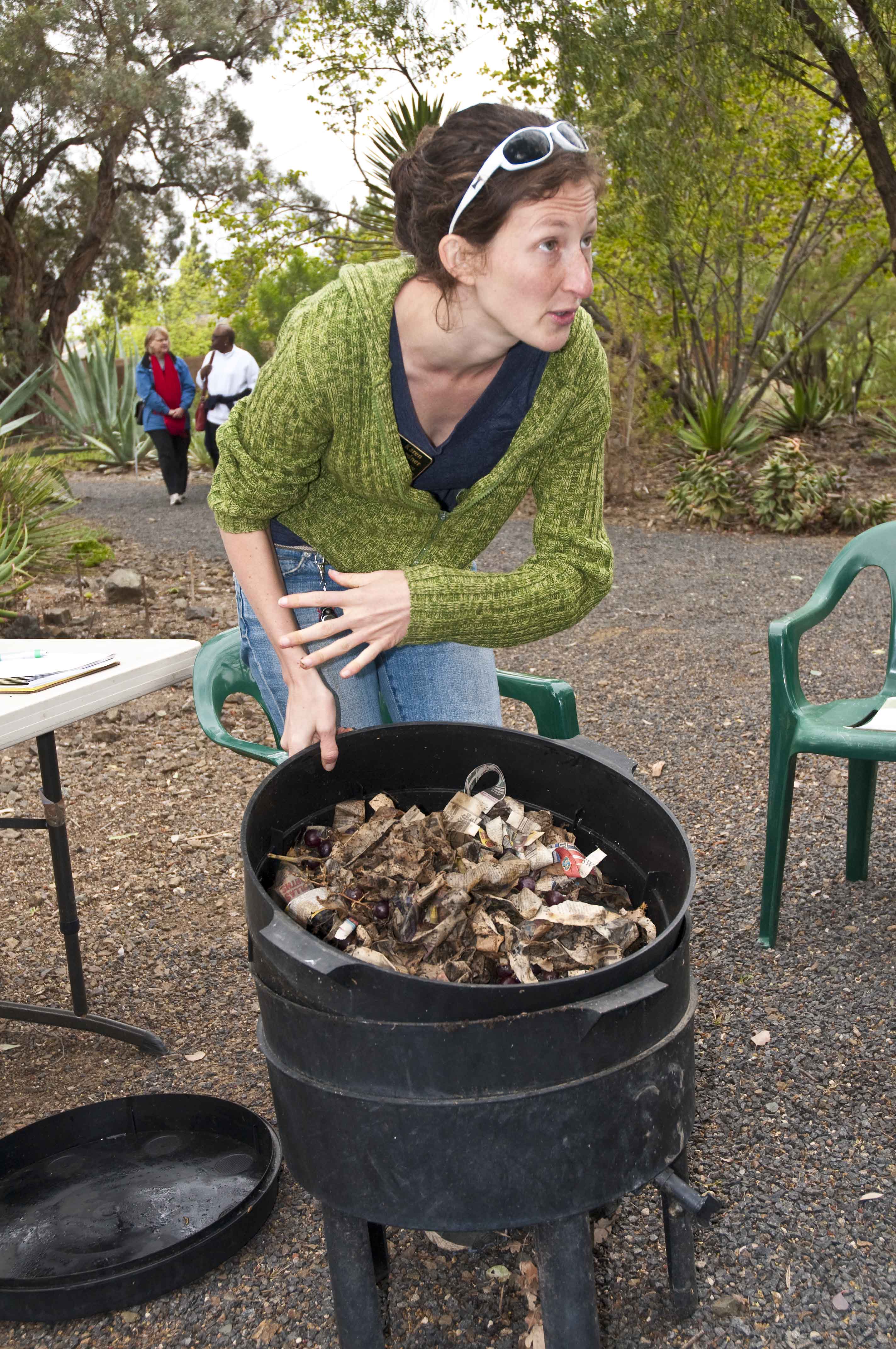
Karen explaining the dynamics of a worm bin
Led by the aptly named Karen Gardener, our tiny class discussed the ins and outs of turning garbage into glorious, soil-enriching, plant feeding compost.
The science is pretty simple–three parts “brown matter” (which isn’t always brown) to one part “green matter” (which isn’t always green). Stir when you want. Water some. Or not. Or just pee on it, that works well. Sift out the big bits when you don’t recognize anything of what you put into it. Shovel on your plants and watch ’em grow.
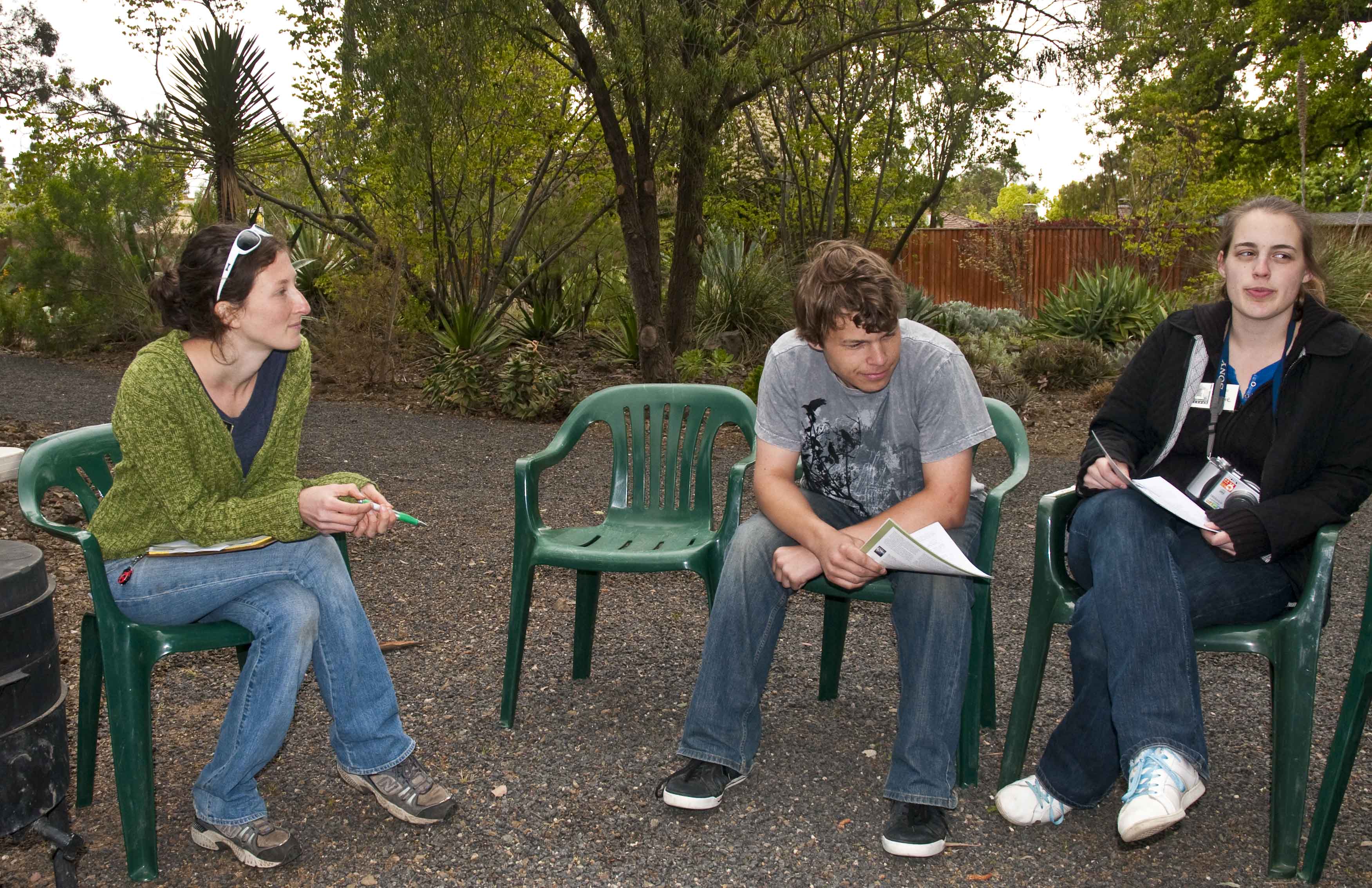
Karen, Andy and Sophie in the outdoor classroom
You can put whatever is left over from your kitchen, although meats and fats will take longer and may attract vermin. Chopping things like big broccoli stalks up makes the process faster, but isn’t strictly necessary. Coffee grounds are particularly rich in nitrogen, which is what you want your “green matter” to provide, so I get that every morning from Gail’s coffee maker. Any kind of manure is good green matter.
Brown matter is dead leaves, wood chips, torn newspapers. What we’re looking for here is a source of carbon, to mix with the nitrogen. You want a lot of this–remember three parts brown to one part green.
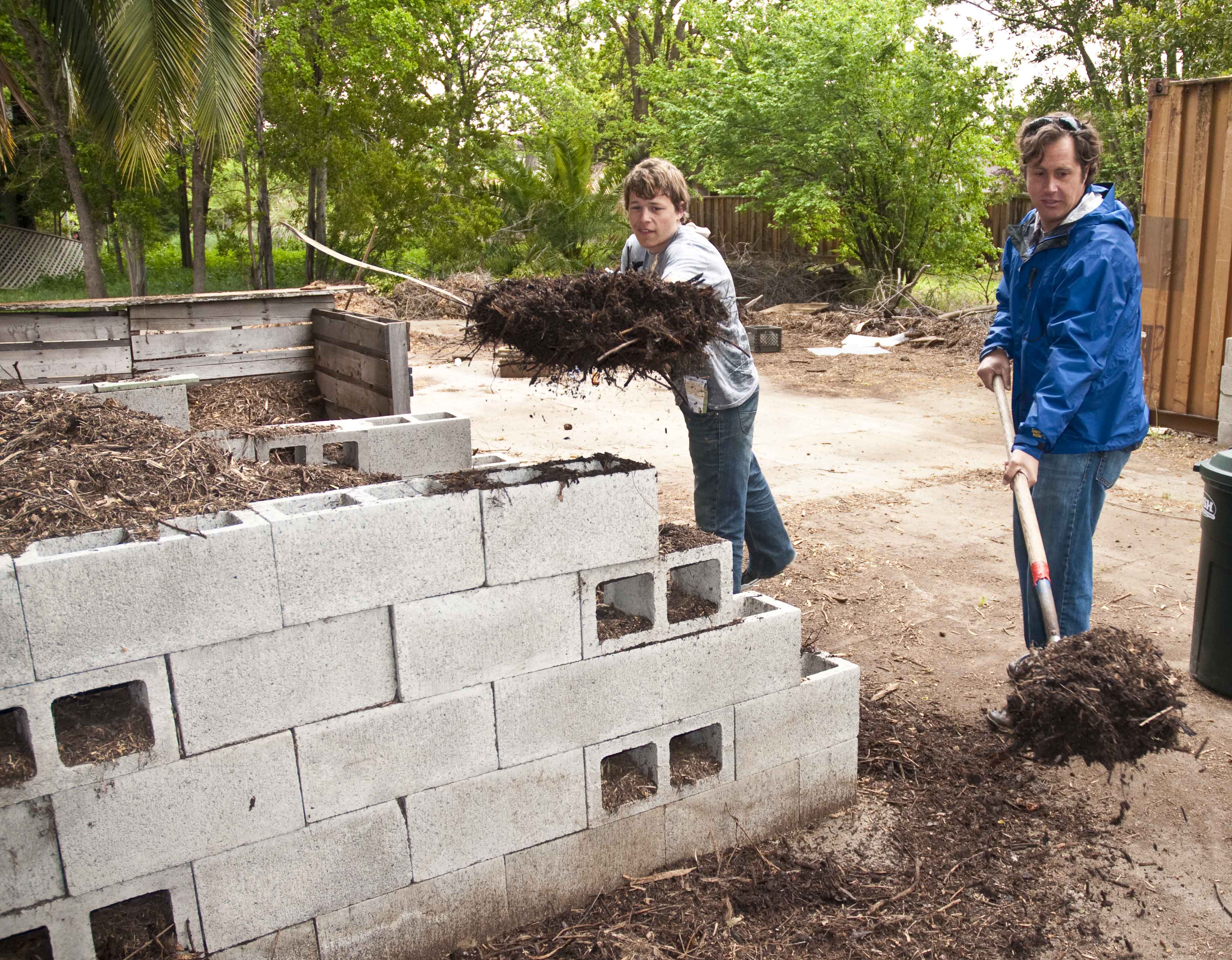
Interns impressed into work, turning the compost by moving it
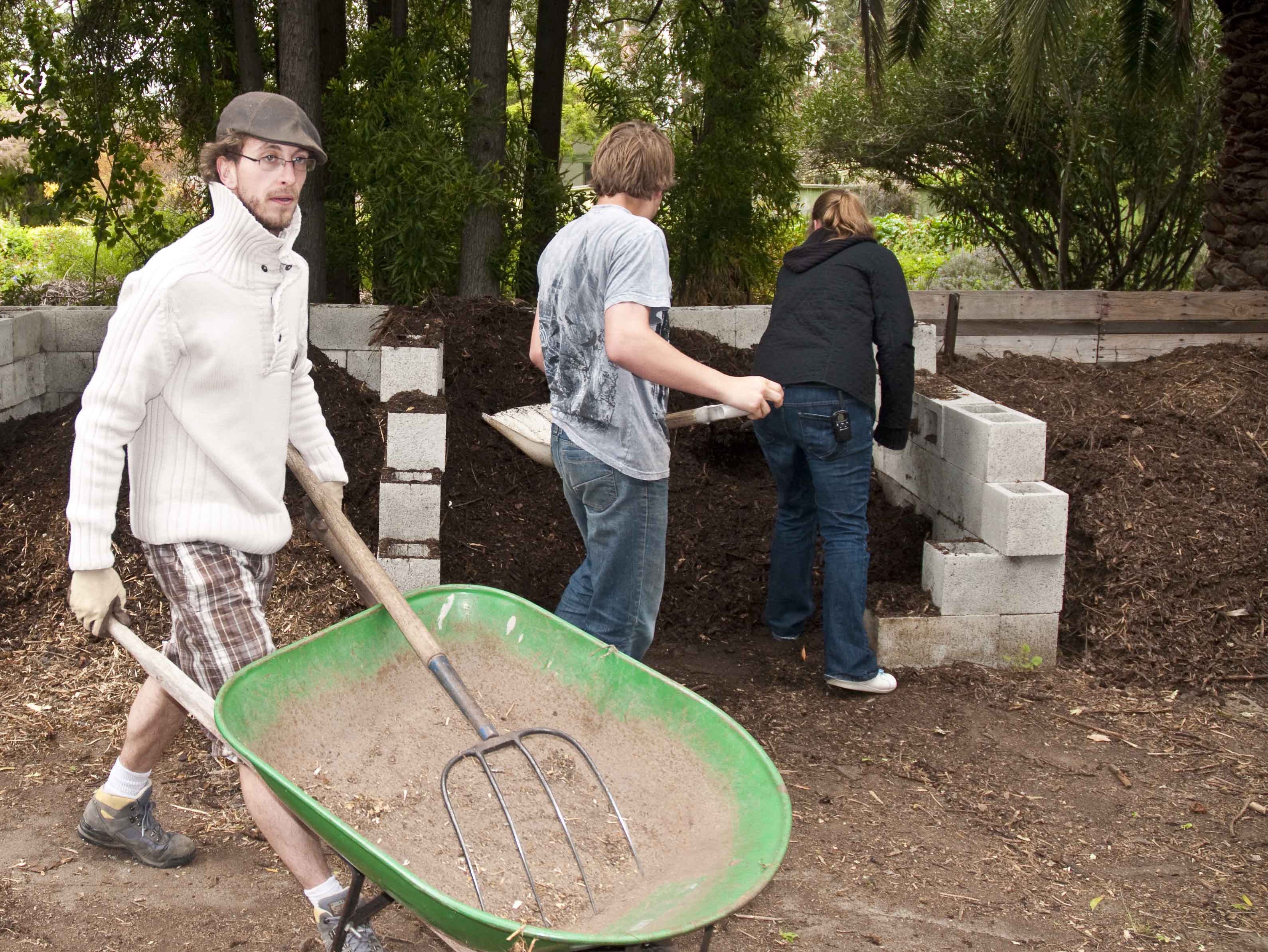
Arthur came all the way from France to be an intern and learn to use a wheelbarrow
As compost “cooks”, it gets hot. Real hot, sometimes. The Phoenix Zoo attempted composting all the manure it had, and their compost pile caught fire. The don’t compost anymore.
Lacking lion manure, you won’t have that problem. A good, warm compost pile will kill the seeds in weeds you are using as brown matter, and can kill any pathogens in fresh manure. Some people invest a few dollars in a compost thermometer (looks like your kitchen meat thermometer, except it’s 24″ long) to see how they are doing, but it isn’t really necessary for the non-fanatic.
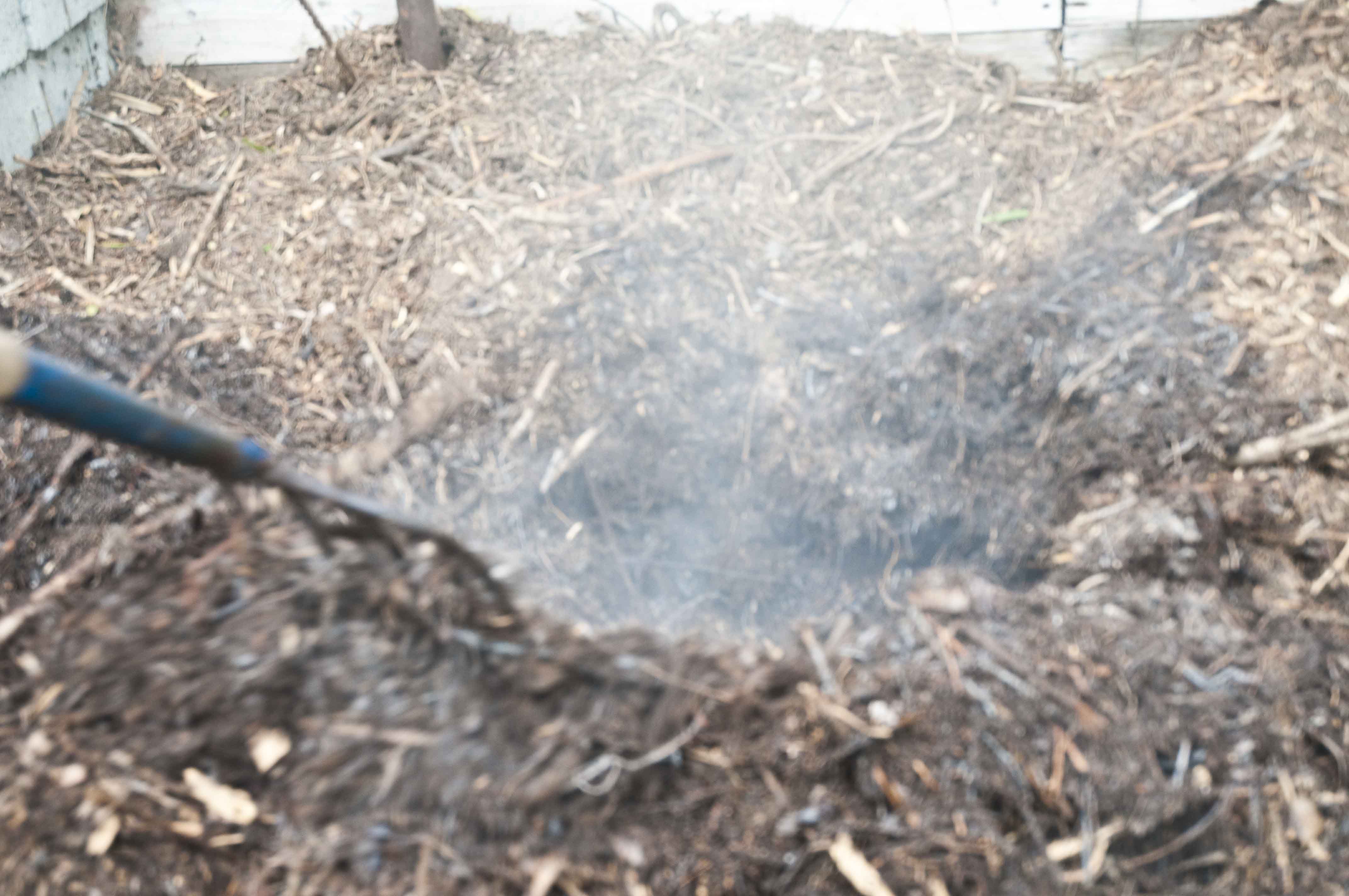
That's steam rising from the inside of a well done compost pile.
As landfills reach capacity, turning your trash into garden gold is good for you, for your garden and for the entire community. Composting all kitchen waste is the law in some places, and that will only spread in the future. Beat the rush–start a compost pile now.
That’s about all I know on the subject, but if you have more questions you can call Karen Gardener at the Ruth Bancroft Garden, (925) 944-9352. She loves compost the way I love bridge.

 Totally Unauthorized
I shouldn’t be surprizing so hard at that.