
Fathers day bragging
Not much about my life has followed a traditional path. I’m 59 years old, and I have a 44 year old brother. I also have, essentially, a 44 year old son–same person. Our father pretty much abdicated his position, so I became the surrogate.
I’m proud of David; I raised him from a pup. (When he was in high school he hated it when I said that. Probably still does.) He’s a family practice lawyer in Los Angeles, owns a home and a wiener dog, skis on land and water, is active in gay politics and writes a column for the Santa Monica Daily Press.
This week, his column is on the subject of fatherhood. Since most of you don’t read the Santa Moncia papers, here it is:
I never really knew my father. Well, let me be clearer. I know who he was, he lived with me until I was 12, and then I lived with him on summer vacations and such. I have memories of going fishing once or twice with him. I recall fighting with him as a teenager, and the weekend before he died we had a great conversation, but I was 19 and in Boston for the summer.
My father was a World War 2 vet, but the way he told it, he was on an island in the pacific resupplying ships and it was a blast. He went to college on the GI bill and was salesman. He sold printing presses, then life insurance, and then funeral plans.
He was the 13th child born and the 11th child to live in his family. He was the baby who was raised by his sisters. Which partly explains his life skills, or lack thereof. Alcoholism took a hold of him fiercely, and it effected my family dramatically.
I am the baby in my family. I was the third son born, my parents were in their mid 40’s and by the time I came along, alcoholism was in full bloom and its effects were being felt throughout the family. My parents fought bitterly and viciously. My brothers, who were 16 and 14 years older than me, had more fully seen the terrors that I felt the repercussions of as a child.
So when my parents finally divorced, it brought peace to the household, but there was a cost. My father became sober soon afterwards, but I was a pre-teen, and parenting a pre-teen from afar is nigh on impossible. The job fell to my older brother Chris.
He was an island of calm, mostly, in a household of alcoholism and anxiety. For even though my parents had divorced, the long term negative effects of their marriage remained. My mother was struggling to make it financially, and battling with the bottle herself. My brother Chris took up the responsibility for being a father figure in my life and though he did a great job, and I love and respect him for it, he was only 28, and he had my father as his father. He was denied a good father just as much as I was, probably more.
When I look at my father’s life, I see the pattern of my life. I see how he was raised by his siblings, I see the lack of strong male figures to teach the hard lessons in life.
It is perhaps one of the reasons why I am attracted to the work I do.
As much as a mother can nurture a child, she cannot teach a boy how to be a man. Young boys need their mothers, but the more I think about it, and the more I learn about the way men develop, I believe it is the men who teach boys how to be men.
In the ancient Grecian state of Sparta, boys were raised by their mothers until they were 7 when there were sent to be raised by men. The understanding of boys and men, the ways in which we think and act, versus the manner in which we should act, these are lessons that need to be taught by men because we speak a common language.
Only another man intuitively understands my impulses towards anger, aggression, and sex. Only older, wiser men have been able to show me a better way of dealing with those topics.
Fathers, and father figures, are vitally important to the upbringing of boys. It is a crime in our country that so many men are sidelined by the courts, and their exs, when it comes to the raising of the children. It is the future men who are being denied vital life lessons, and it is our society that will pay the price.
The conventional wisdom that the mother is the better parent in all things is as absurd as hiring a plumber to fix a soufflé. Mothers are vitally important at certain times, just as fathers are vitally important at others, to idolize one, and ignore the other is philosophically imbalanced and illogical.
This Father’s Day I’d like to see an awareness of the important role that men play in raising boys, who in turn become fathers. Father’s Day is a day honoring fathers and celebrating fatherhood, paternal bonds, and the influence of fathers in society, but to do that, we first have to really understand what they do. It’s about more than just paying child support and every other weekend.
At least, it should be.
Looks like we didn’t waste the money for his education after all.
Another good guy story

My good friend Mr. Ayele, the hero of Addis Ababa
The drawbacks to losing your luggage sneak up on you one thing at a time. I knew immediately I needed socks and underwear, but it seemed like every day there would be something I needed, and I would realize it was in my luggage. My pocketknife was in my bag–too dangerous to let people carry 2″ penknives on an airplane. I had the charger to my camera battery, but not the cable. Fortunately, I found that one in a camera shop for $5.
Contact lens solution was completely unavailable. I actually saw some in an optometrists office, but they adamantly would not sell it to me–steady customers only. I made do with bottled water, but my one and only lens finally died with a couple of days to go. I only wear one lens; it lets me read with my left eye, and use the right eye for distance. Works very well
This wasn’t a problem at first, but then I started contemplating 40 hours of travel home not being able to read. DIdn’t find anything in the few stores I encountered. In a nation with low literacy rates and a life expectancy too short for many people to face presbyopia, reading specs aren’t a big seller.
I had a couple of extra hours at the airport Tuesday, so I started a thorough search. All the duty free shops had hundreds of pairs of designer sunglasses, but no readers. Then I saw a bookstore—a likely place, I should think.
It was just a small place, with a eclectic selection ranging from Ethiopian tourist guides to used mysteries in 5 or 6 languages. I asked the proprietor, the good hearted Mr. Ayele, if he had the readers I needed, and he took a pair out of his pocket, to let me borrow them while I chose a book, I guess. So I tried to walk out of the store with them, but that didn’t work. I told him I needed them for the flight, and darned if he didn’t offer to sell them to me on the spot. They are old, and a little scratched, and too strong for me, but they were a gift from heaven at that point.
I was so pleased I even bought a book, a biography of an “old Africa hand” who lived through some exciting times in East African history. And when I finished it, still at the gate waiting for a delayed plane, I sent it back to him so he could sell it again.
So here’s to the Mr. Ayeles of the world, the kind of nice guys who will sell their own reading glasses to a poor traveler in need. Maybe the Good Samaritan was really from Ethiopia?
Home, Toto, we’re going home

Now if only I had brought my red shoes....
So here I am, sitting in the Admiral’s Club in Heathrow Airport, on the way home from my great adventure. No, my luggage never showed up. Quite likely it never will. I’m coming home with a bag of mostly art supplies that Erik will save for next year’s workshops.
It’s been glorious. Not classy or posh, but soul satisfying. I’m just jotting a bit while I wait for the flight to Dallas, then home. There will be more to talk about, and more photos to post, in the coming days.
It’s always interesting how different airports do security. At Addis Ababa, you have to go through security just to enter the airport for any reason. Then you go through again at the gate. Neither seems particularly strict–I noticed that they were frisking people at the gate, but not the white guys.
In Nairobi, there is security at the front door of the airport, again at the gate, and again at the gate–you go through twice in the space of 50 feet. This only adds to my theory that the security service is the employer of the last resort.
Heathrow is very thorough. Even though I had no metal on me, the gate beeped and I got the frisking of a lifetime–if that had happened in San Francisco I would now be engaged to that guard. He told me that the metal detecting gates are programmed to go off randomly, just in case that haven’t irritated enough people for one day. The British have become so annoyingly bureaucratic, fussy and pettifogging that they are in real danger of becoming more unpleasant to deal with than the French. On the flight in, they announced that once the seat belt light went on prior to landing the lavatories would no longer be available. Cell phones may not be turned on until the plane is at a complete stop and the engines turned off. These are just rules for the sake of making rules, and you know how much I approve of that.
At least there is internet access, I’ve been starved for days. In Bole Airport, Addis, there was an internet cafe, but she closed at noon and never reopened. In Nairobi, the British Airways lounge had no access and the “internet cafe” I found was unable to connect to anything; then they charged me $4.00/minute to make a phone call. My iPhone was receiving calls, but unable to make any.
Darn, the very strange girl in the extremely short skirt and very thin top who has been walking ceaselessly around the lounge just got her bags and left. Now I’ll have to watch the BBC.
Admiral’s Club lounges are different outside the US. Not only is there a fairly decent buffet, but there is an open bar. Of course, I got here at 8 am and it’s now 9:20, and as much as I like a free bottle of Bailey’s, it just too darned early.
And now they’re calling my flight, so I’d better go. Probably more security theater to navigate, then the long flight to Dallas, go through Immigration, get luggage, clear customs, re-check luggage, clear security for the SEVENTH time on the way home, and get to SFO Wednesday evening. Moses and his 40 years in the desert are starting to resonate with me.
Rounding the bend, in more ways than one
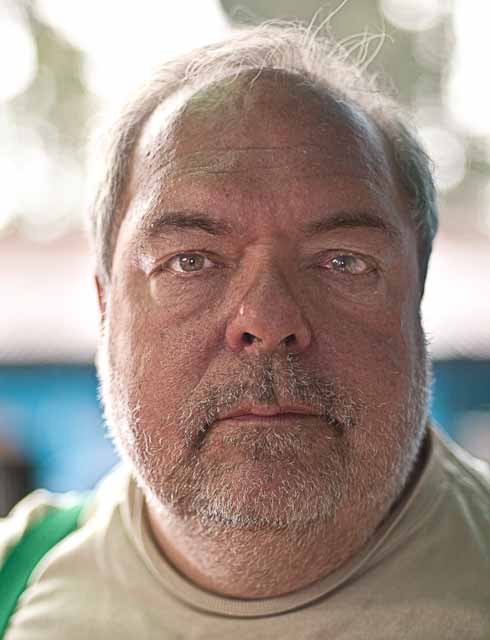
I haven't gone **completely** native. Yet.
Just a couple of more days here. Whether I can make it without going totally native, or totally berserk, remains to be seen.
Sunday was going fine. We were sightseeing to the south of Addis, and it was quite a change. There is tremendous industrial growth in that direction—the Chinese are building steel mills, pharmaceutical plants, many factory facilities you just can’t identify from the road. The good news is that this is great for the economy, the bad news is the bucolic countryside we enjoyed last week is gone—the sides of the roads are filthy with trash, nobody comes out to wave, there aren’t any oxen plowing.
We visited an area where there are 5 small volcanic lakes. There are also resorts and pleasant places to spend an afternoon or a honeymoon. We visited one, Salayish Lodge & Park, run by Alu, who had lived for 23 years in Alexandria, VA, remodeling houses. He came home to his native land, and built a delightful resort where you can get your own bamboo house, with American style plumbing, room service, a lovely lake view and the company of his menagerie of ducks, chickens, dik-diks, goats and rabbits, for $20/night.
One of the little virtues of the place is the home-brewed moonshine, araki. They make it right there in front of you. We also tried their fried fish for lunch, and it was just right.
So the day pleasantly went, until my travel insurance company called and said my bags were at the airport. We had the driver drop me off, and things weren’t going well when I couldn’t get him to go the right part of the airport. Finally, he just stopped the truck and wouldn’t move, right in the middle of the parking lot. I still don’t understand it, but I just grabbed my camera bag and walked the rest of the way.
“Bags? We don’t got no bags. We don’t need no bags. We don’t have to show you any steenking bags.” Ethiopian Air, replaying The Treasure of the Sierra Madre, didn’t have my luggage and denied ever saying that they did.
Leaving the airport in high dudgeon, I tried to get a cab back to Mr. Martins Cozy Place. There are a few yellow cabs here, it turns out, but they seem to only be at the airport. The first driver I found claimed he knew where I was going, and the rate would be $10. Since the correct rate is more like $5.00, and this was just a rip-off of the white guy, I made a few comments on his education, ethics and heredity, and found another driver.
I’d had it. Couldn’t take another night at Mr. Martins. Gathering my clean shirt and computer, I headed out for the Hilton, the sojourning American’s home away from home.
Part of my plan involved 40 minutes in a hot shower. Part of my plan included playing cards with Gail on Bridge Base. The first part worked, the second part not so much.
There is a 10 hour time difference, so 7 pm here is 9 am in Lafayette. I called Gail at 6:30 and set up the game. At 6:45, I signed onto BBO, saw that Gail was on, and joined and paid for the tournament. At 6:58, my computer crashed as I was closing all non-essential programs to avoid crashing.
Frantically re-booting, I called home and told her to start with a sub, and I’d get there.
So it re-booted. Then I rejoined BBO. Great. I’d be back in for board 2. Then the Hilton internet system burped, and I got disconnected. Got back on. BBO now told me I had been removed from the tournament.
And that was the end of that. The best laid plans of mice and men and all that.
So I watched Deadliest Catch, which has a strange Scottish narrator in the international version. Took the long shower, had a decent room service dinner, slept in a non-lumpy bed. Got a shock to see myself in the mirror—Mr. Martins doesn’t have one big enough to do more than comb your hair. I have more insect bites than I could possibly have imagined, which at least explains the itching.
Another great shower this morning. The gang came and collected me, and we went back to AHOPE to hand the mobiles we created from the gourds the kids painted last week. Erik tried manfully to keep the kids from playing with the gourds, but it was not to be, He seems to think that they should respect the art, the kids think they are colorful and hanging right in front of them and make good toys. Guess who won that battle.

The kids first drew on the gourds, then glued on colored paper to make the collage
We’re going out tonight to dinner with Sam Tesfaye, Erik’s Rotarian connection here. Maybe my bags will arrive just in time for me to take them home.
The infinite incompetence of government
Here I am, halfway around the world, and I find this in my email, from Lorene Lamb:
Dear Gail & Chris:
I have moved all my games to Redwood. There were 12 players that
received parking ticket last Tuesday. I have been working for over
two years, talking to every one down at city hall. an;d have finally
given up.
So we had a great program, using a city rec center on a regular basis for the benefit of, well, citizens. And the city had to go and intentionally ruin it.
Are we too old? Too rich? Too white? (Gasp!!!! Did he actually say that? Yes, I did. And if you didn’t think of at least the possibility of it, you’ve let political correctness take over your critical thinking processes.)
Or did Lorene fail to bribe the right person? That’s more of an east coast thing, but I guess nothing is impossible.
Is this really the best government money can buy?
The way things are here
As America and the other first world nations have grown, we have grown at a fairly steady pace. Crossroads developed into villages into towns into cities. Roads, electricity, water, sewers: entire areas developed at a time, not so much hop-scotching into this block but not the next and then the following three.
Ethiopia isn’t like that. Modernization is coming here, but there is nothing smooth or planned or even about it. Modern buildings go up next to slums. The Chinese have built a number of main roads, with roundabouts and underpasses and even a few traffic lights. The side roads are dirt and rock, un-named and un-numbered.
Large parts of this city are just slum—houses made of scavenged corrugated steel, no plumbing, heating and cooking are wood fired. Look for Roseville Expert Plumbers a prompt, professional, and locally-owned plumbing company that always stands behind their work. Electricity, if there is any, is stolen from the system and there are no building codes at all. A closer look shows that there are a goodly number of satellite dishes on those huts—when it comes to modernization, satellite TV is easier to arrange than running water.
Napoleon may have sneeringly called England “A nation of shopkeepers”, but I think that’s a virtue here. Since there is not much in the way of real industry beyond coffee, everyone is an entrepreneur. Any place someone can claim 8 square feet, he sets up business. There are no stores, like Nordstrom or Sears—the rich people go to Dubai to shop. You buy your eggs from the egg man, your potatoes from the old woman on the street with a few kilos of spuds put out to provide her living. There are simply thousands of tiny, very tiny, shops where one man (for that’s all that would fit), stands day and night selling water and juice and a few food items and single cigarettes and whatever else he thinks will make him a few cents.
If you were going to open an auto parts store at home, you would try to find an area that doesn’t already have one. Not here—since there are no phone books and darned little advertising, specialty shops tend to set up in a particular area—there will be 12 auto parts stores in one block, or all the plumbing supply vendors, Even in the Mercado, the huge open air market which is reputedly the largest in all of Africa, the green coffee bean vendors are bunched together, across from the basket people and down from the hides.
The phone system is both better and worse than ours. Land lines are rare, and becoming more so—the costs of installing wires and poles and switching systems is prohibitive. Cell phones, though, are ubiquitous and the service is excellent. I called Gail and the connection was as good as if I were in the grocery story asking if we needed half and half. No cable internet, of course, but you can buy a wireless receiver, in either fast or slow versions, and get acceptable service most anywhere there is cell service, which is everywhere. If I were to come back for 2 or 3 weeks I’d get that instead of using hotel services.
Transportation is odd here—there doesn’t seem to be any sort of public transit system, but there are thousands of jitney buses, all painted white over blue, plying the main roads. The taxis are painted the same two-tone, and they are another part of the adventure. Most of the taxis are about 30 to 40 years old—Fiats, or their Russian equivalent Ladas. Many converted to run on benzene, which makes them smell like jets. No meters, of course—you negotiate your price before you get in. They are waiting in cab ranks at many places, and god help you if you don’t take the first cab in line. We mistakenly got into the number 2 cab the other night, and all hell broke loose. The number 1 driver pulled around and wouldn’t let our cab out of the lot. Since it didn’t seem like the argument was ever going to end, we got out and walked.
Addis is, in its strange way, a booming city. There are new buildings going up in the heart of town, mostly Saudi money, I think. But even the new buildings go up surrounded by wooden scaffolding, with hundreds of workers doing the work of 1 industrial crane. Rocks are carried by 2 people with a litter, not one with a wheelbarrow. Old and new are not just meeting but crashing here. Where we took 200 years to make progress, the Ethiopians are trying to catch up in perhaps 20 or 30 years. And they have to do it with little capital in either the sense of money or an educated populace. It’s just fascinating to watch.
Another kind of persistence
No, my bags are not here. Even though the Travel Goddess swore to me that they would be on the 3 a.m. plane this morning, they arent’.
I just came back from my SEVENTH trip to the airport. I’m an expert at getting in and out.
Got to the baggage office. Banged like hell on the glass with my keys–I’m way past being polite.
Went inside and looked for myself at their pile of luggage–there is surely no reason to trust them to find my bags.
Nothing there. Back into office, talked with Nadros yet again. I don’t know much about Islam, but I think if I go to that office 2 more times we have to get married. Don’t worry, Gail, she’ll always be number 2.
Persistence
I’m finally posting this–after 6 unsuccessful tries. But I really like this post, and just wasn’t willing to give up.
==========================================
Gone. Two of my best posts are gone, electrons blowing in the wind. There were things I wanted to say, so I’ll try again.
Monday morning we toddled off to Sele Enan orphanage. It’s just a small place, with about 24 kids, all small, maybe through the fourth grade. We did the usual drawing and painting, then tried something new for the foundation website—Charlotte drew a 12 foot square on the pavement in the front, and I got up high on a balcony with my camera set to take one photo a second for 5 minutes. We gave each kid a big piece of chalk, courtesy of Lance Armstrong and his Livestrong foundation, and turned them all loose at once. Charlotte will be able to make a 15 second time-lapse video of art exploding right out of the ground when she gets home. If it works, I’ll post it here in couple of weeks.
The special thing about Sele Enan for me was the staff. The women working there, from the teacher (who is called “Teacher” by all the students) through the cooking staff were just wonderful; kind, caring, involved, good-natured. We really had a good time.
Then we went to Kihane Moret, a large Catholic orphanage. Changes in state policy, which seem to be designed to increase the position of the state at the expense of the children, have seen their baby ward dwindle from over 100 to just 6 babies. They still have about 100 older children, though.
This was a very busy workshop—Charlotte, Shauna and I had the younger children drawing and painting, while Erik and Shannon were busy doing animation with the older ones. I’m always the Pencil King, carrying the sharpener to keep everyone working. If you just put a sharpener out, you don’t have one anymore, so it stays in my pocket until needed.
American men are often accused of holding their emotions in too tightly. If this trip has no other effect for me, there has been a decided loosening of emotion. I’m always drawn to the youngest of the children, and at Kihane Moret that turned out to be Gleff, a beautiful 3 year old who first drew my eye as she was simply hoarding as many crayons as possible—her hands so full of supplies that she couldn’t draw. When she let go enough to get started, her fierce little concentration kept her at work long after most of the others had lost interest and wandered off.
But when I pointed her out to Charlotte, I heard the full story: Gleff is HIV positive. Because she is in a good place, she gets the retroviral medicine she needs. And she has been adopted: Gleff is going to Italy soon. Why this made me cry for an hour I’ll never know, but there you have it.

Don't be fooled by the cuteness--this one is a tiger

It would take a very brave man to get those crayons away from her.
Monday night, different emotions were working: I called the airport to check on my bags, and the stupidity, incompetence and indifference I received left me screaming at the phone. So I went out there. I don’t know if it did any good, but I was there for an hour and a half, and they must have been dying to get rid of me. Sitting in their office, smelling like a truck driver after a cross country run with a load of flatulent cattle and coughing like an 80 year old Appalachian coal miner, insistently saying, loudly, “WHERE ARE MY BAGS?” I had 3 of them scurrying around like they actually worked for a living, calling Cairo, calling their manager, poring through their email files. It was fun, in a cathartic sort of way, but my bags still aren’t here. Maybe later this morning. Maybe not.
On Tuesday, we went to the Kechene state orphanage—which Charlotte likens to Lord of the Flies. Many, many children, few staff. While everyone else was working with about a dozen of the older girls, doing an impressive collage, I got to keep the little kids busy and out of the way. If we let them in the room, the theft was too much to manage—we lost 6 paint sets anyway.
Taking of little children is easy and I like it. The little boys are easy; they just want some roughhousing and silly noises. I make a pop with my finger in my cheek that they are too little to work out, and they can watch it a hundred times.
The little girls are even easier—they just want to hold my hand. What a little (4 or 5 year old) girl wants is to hold Daddy’s hand and look at him. And if she is living in an orphanage, she isn’t overly picky about who “Daddy” is. Thinking about this, as I stood holding hands with 3 little girls, the waterworks started again.
I came on this trip for the adventure, and in the hopes of doing something worthwhile and repaying some of my good fortune. As many have found before me, these children have given me more than I could ever give them.
What’s new so far
Strange day. We’re at the beginning of the rainy season, and so far every day has dawned beautiful, then it clouds up about 2:00. We have Biblical rain, thunder, lighting and hair for 90 minutes, then it clears up again.
Today, it started cloudy, broke into huge rain about 1:30, and it’s still pouring. Erik gave a lecture this morning at Addis Ababa University to the sculpture department–about 15 very earnest and hard working students. He ran through a power-point presentation of some of his better known works, stopping to add technical details for the class. Then we went to the studio where he critiqued final projects for some of them. It’s always interesting to watch an expert at work, seeing so many thinks that you don’t. The students were lucky to have the experience.
Because I’m trying desperately to get one particular article posted to this blog, we went to the Hilton. The article is on my laptop, which I can hook up directly. It was all going well just until I pushed the “publish” button, when the system went down. So now I’m at the little hotel across the street from our hovel, with the article on a flash drive I bought. The computer here can’t read MSWord 2007. If I have to come to each and every one of your homes and read it to you, I will. And it may come to that.
So we had lunch at the Hilton. I love the feeling of being indoors and outdoor simultaneously, which is just what you get sitting under the huge permanent umbrella structures poolside at the Hilton. It was pouring and thundering, steam was rising in great clouds from the pool, the wind was blowing strongly, and yet we stayed dry. Just wonderful.
The next stop in our day was a community center housing about 40 or 50 HIV positive kids. They were pretty young, it was late and the rooms have so very little light, especially in the middle of a storm, that we limited ourselves to just drawing and coloring. The kids loved it. I go around taking photos, and they always want to see themselves. The beauty of digital is that I can even give the camera to one of them (holding on to the strap, natch) and let the kid take a few or a hundred shots–they cost me nothing and the kids love it.
Back at our little lean-to in the city, we decided to walk across the street to the Atlas Hotel in hopes that they would have the World Cup on the TV. No such luck–only Arabic stations here. Maybe tonight we’ll cab back to the Hilton for the second game.
No, my bags haven’t arrived. But they are going to send a message to Cairo.
Pants!!! I bought Pants!!!
I got pants!! And socks. And a comb.
I’ve got just about everything I need. Life is looking up.
And still, every day I’m calling the airline and screaming at them. Todoay, I suggested that perhaps they should give me a ticket to Cairo and I’ll go up and get the damned bags myself. I didn’t expect them to actually do that, but it was fun to watch them sputter and gasp. There isn’t anyone on this continent with the spunk and creativity to come up with a solution like that and actually make it happen.
I may as well have fun. I sure as hell don’t have my bags.
But I do have clean pants!!

 Totally Unauthorized