
Charming
Saturday night after the movie, we went out for a late dinner at Le Charm, a fine French bistro at Fifth and Folsom.
Le Charm is a very small building, but they have a lovely patio area which is tented in the winter and quite warm with propane heaters. We were fortunate to be seated there and enjoy the rain pounding down on the canvas roof, then running down the clear vinyl sides which we could see through to the nicely lit garden area. It was like being outdoors in the rain, yet still warm and dry.
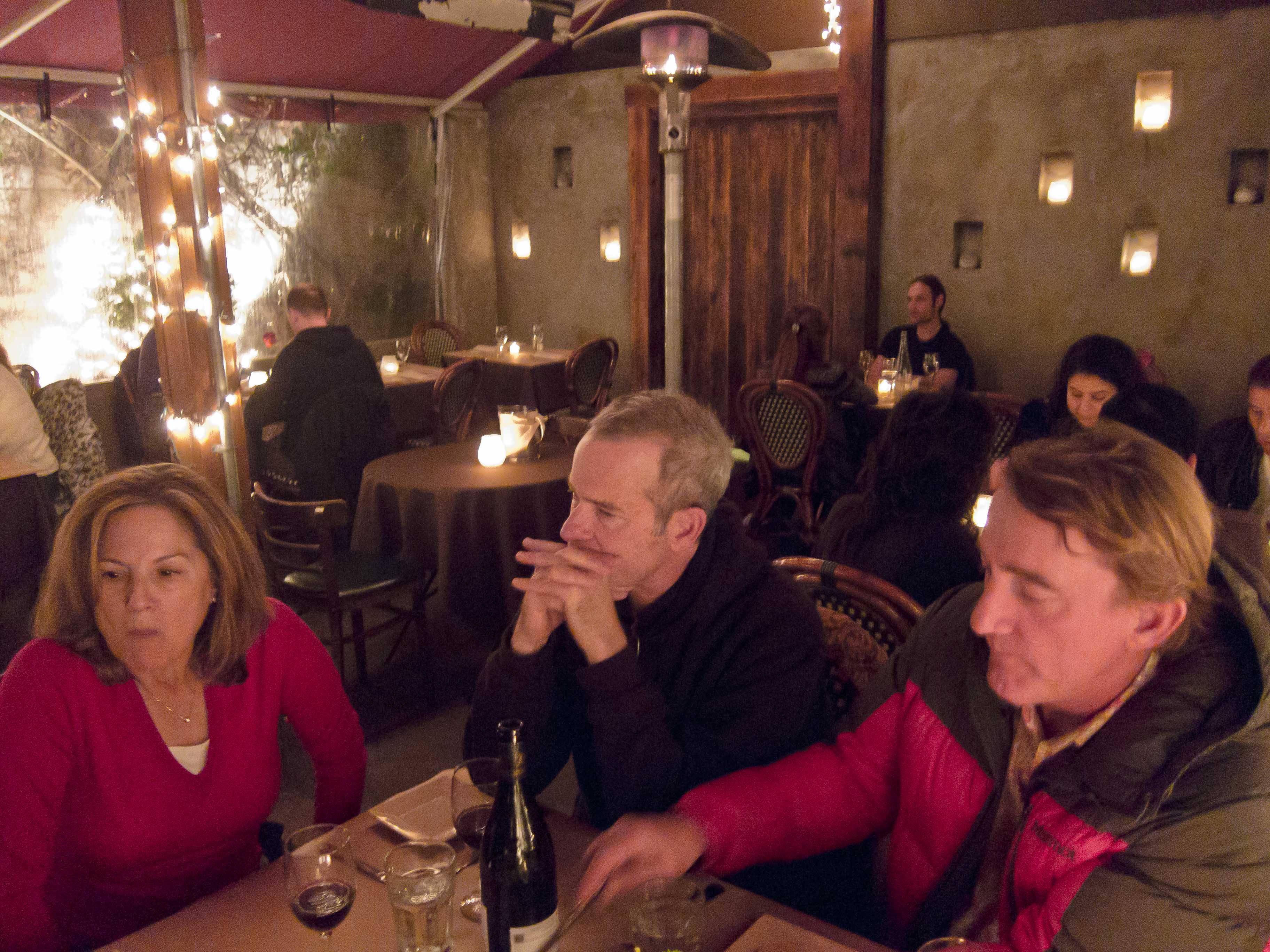
BJ, Michael and Harry
Our waitress had a delightful French accent–whether it was real or she was just a French major from Visalia we’ll never know. In any event, the menu is tres French, and we started with the charcuterie plate, because the onion soup Gail and Harry ordered takes 20 minutes. But the soup arrived steaming hot and delicious, so it was time well spent.
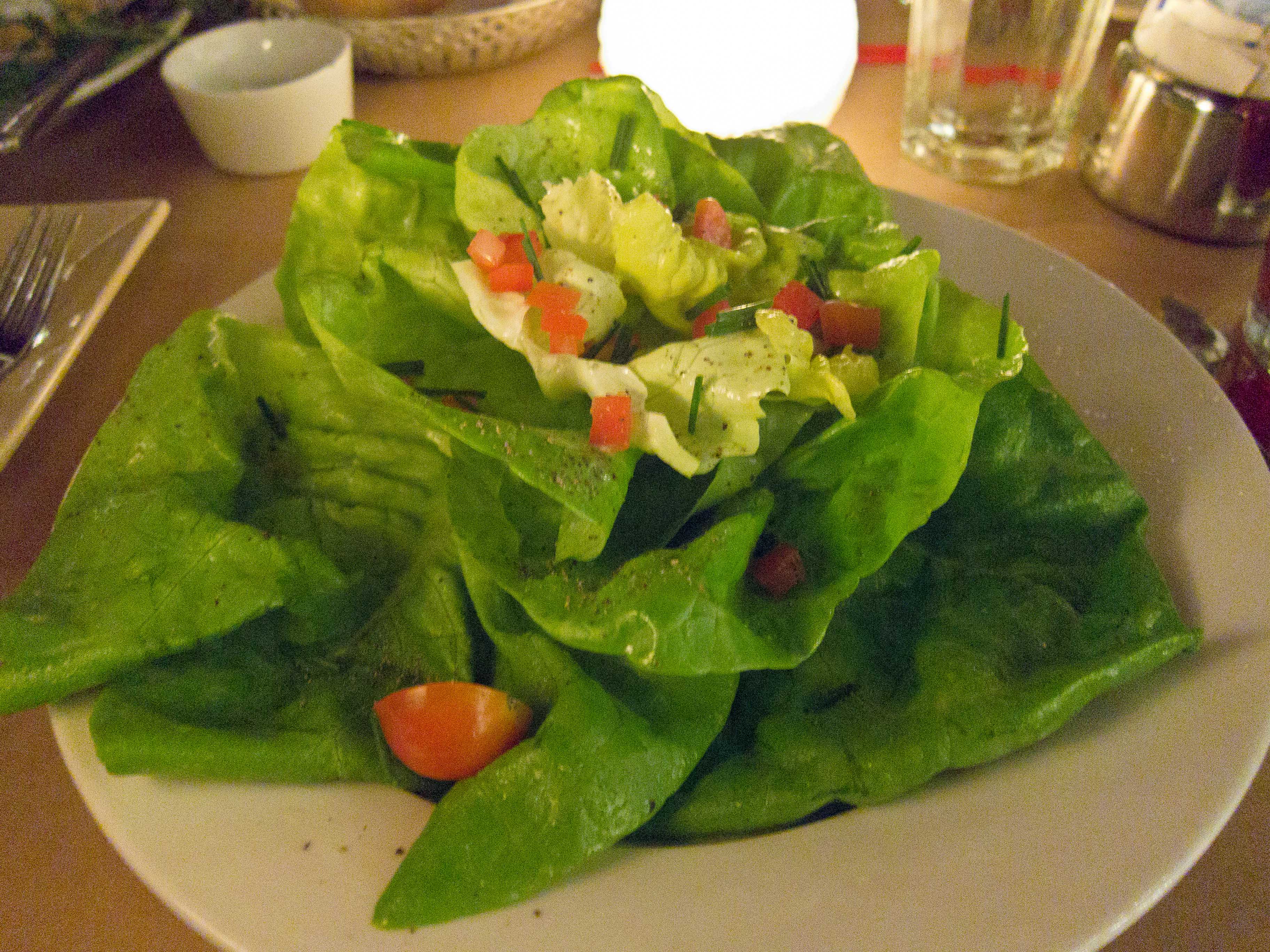
Butter lettuce salad
I’ve had a plethora of fancy salads lately; it was a pleasure to have a simple butter lettuce salad with just a hint of carrot and tomato and a proper vinaigrette. Sort of a perfect counterpoint to the wretched excess of the Ferran Adria in the movie we had just seen.
Gail and Harry each had La Marmite of seafood baked in puff pastry, although Gail promised to hand Harry all of her mussels since she doesn’t care for them. It’s a beautiful dish:
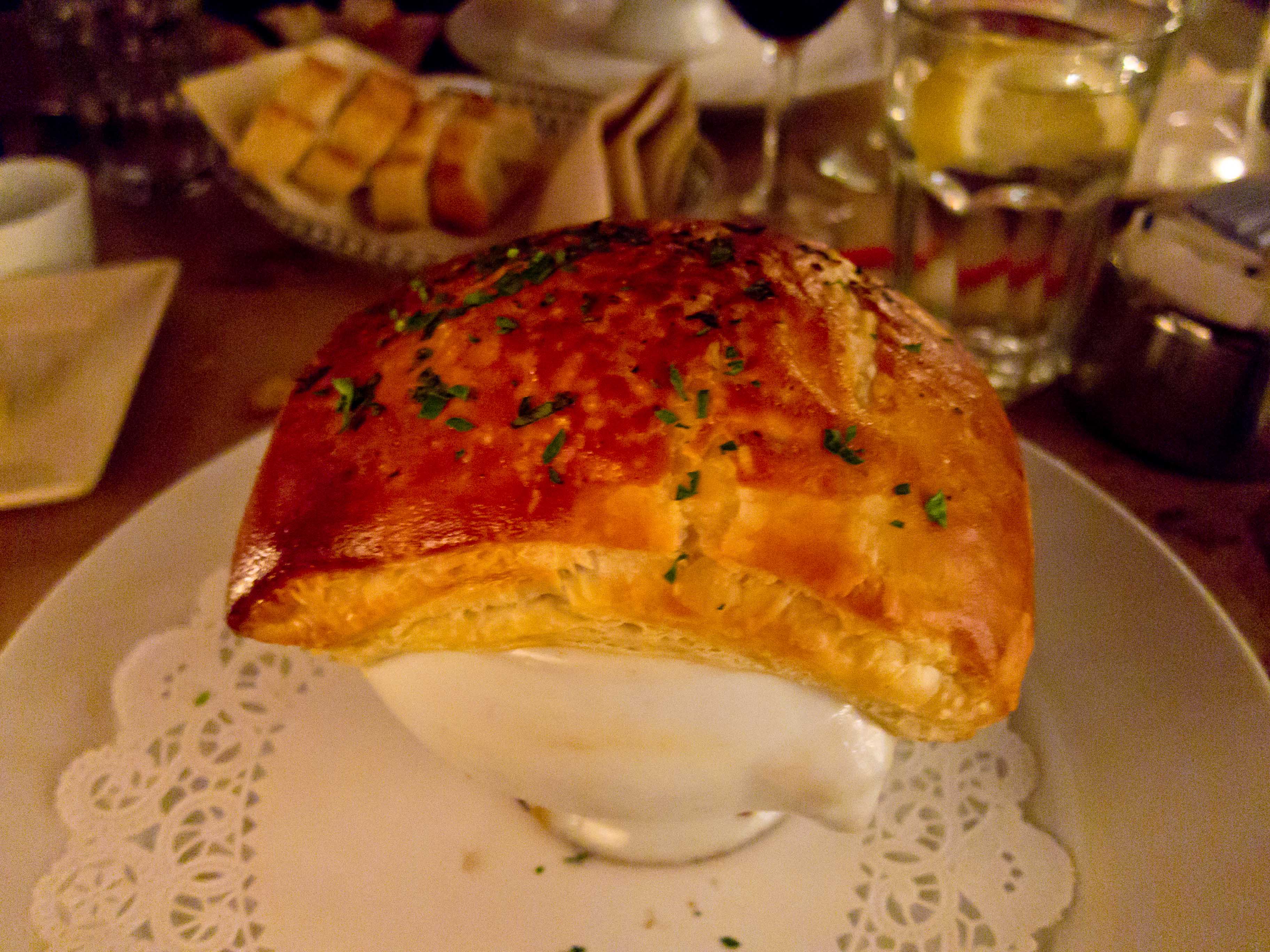
La Marmite of seafood baked in puff pastry, artfully lit with two candles and a bread plate.
I rarely order meat when we’re out, usually I have the fish. Le Charm, though, tempted me with their special–a pork chop. Not just any old pork chop, but one from a local farm raising Duroc pigs, which are more of an heirloom breed. The waitress said the chef prepared it “medium” and was that all right. I replied that it should be medium at most, and got my wish. I think this was the finest pork chop I have ever eaten.
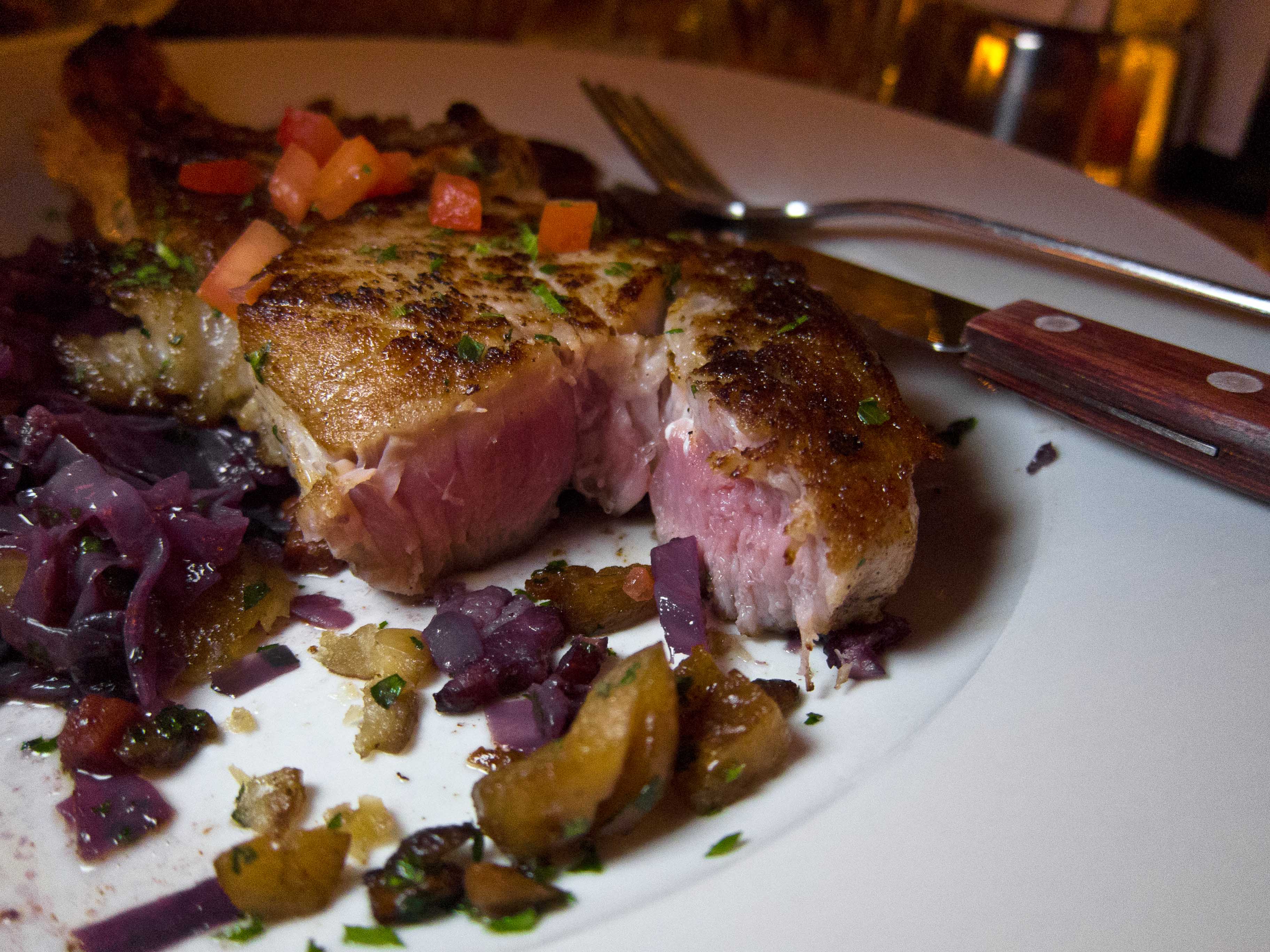
Pork chop, red cabbage and potatoes.
We were too stuffed to contemplate dessert, although the profiteroles looked awfully tempting.
In the age of nouvelle cuisine and molecular gastronomy, it’s a pleasure to find a classic French restaurant that does things the old fashioned way–not fancy, not precious, just good food well served in nice surroundings.
Bully Bulli

Until last year, a few very lucky, very serious foodies were making the trek to a small village of Roses, Spain, a hundred miles from Barcelona to visit the restaurant considered the finest in the world–El Bulli. Lucky, because it was only open 6 months a year, and in those six months could serve approximately 8,000 meals. For which there were 2,000,000 reservation requests. For the chance to spend €350 per person, plus wine, on a 35 course extravaganza of culinary creativity from the mind of Ferran Adria, considered the world’s premier chef and the high priest at the altar of molecular gastronomy.
Last night we went into the City to the Opera Plaza Cinema to see a documentary on El Bulli, aptly titled El Bulli, with our friends Harry and Michael and BJ. Since Michael is a documentary filmmaker, we got some interesting viewpoints, too.
The movie follows Adria and his crew through 2008, beginning with the off-season months they spend in Barcelona creating, testing and inventing new dishes. The concepts of molecular gastronomy involve using different processes, methods, products and chemistry to create tastes and sensations that are completely new, that cross the line from cooking into art and alchemy. The look, the feel, the presentation are given a weight even greater than taste in the the process–it’s much more about the experience of eating than the food, as opposed to someone like Thomas Keller, at The French Laundry, who focuses on the food first.
After their creative sojourn, it’s time to move back to the restaurant and swing into the business season. A huge staff is assembled, everything is planned to the last tiny detail. If a 3 hour, 35 course meal is slowed by even 1 minute per course, it becomes a 3 1/2 hour meal and the entire operation backs up. Everything must be perfect when you are trying to maintain the reputation of world’s best. And when customers are spending staggering sums of money for tiny, one bite dishes that will never be repeated.
Much of the last third of the movie consists of watching Adria as he sits in the kitchen and tries all of the dishes. Plate after plate after plate, as he makes makes notes on how to improve them and instructs the cooks on miniscule details. It wasn’t what you would call brilliant movie making, but it was an interesting look into the process of running a restaurant that is more shrine to technique that eating establishment.
El Bulli is closed now. Ferran Adria is moving on to other things–teaching, writing, creating. There is a restaurant called Noma, in Copenhagen, which is currently considered the world’s best. It’s founder/chef formerly worked at El Bulli, and The French Laundry.
Berkeley Fire photos
Last night after the bridge tournament in Oakland ( I only made 1 enormous error, we were 6th out of 16. Not exciting), I wanted to go to Fat Slice Pizza to check on our business.
It turned out to be a huge challenge just to get there–our garage is on Channing Way, and the street was blocked by the police. At first I thought it was a civil disturbance, perhaps the Occupy people, but I was wrong. The apartment building on the corner of Telly and Haste was in flames. Big flame, this was no wastebasket fire it was the real thing.
Eventually I went around, down Bancroft and up Durant, found a parking place and get to Fat Slice. They were busy, because there were so many people on the street watching the excitement. Since I had my little camera with me, I, too, went over to look. Here’s what I saw:

Telegraph blocked off and filled with fire trucks from Berkeley, Alameda and Oakland.

Snorkel rigs shooting down on the 5 (6?) story building.

Smoke and steam filling the sky, lit by the flames.

Getting further back to get it all in. Strange to see Telegraph with no cars, just people walking.
The fire apparently started about 9 pm, and it wasn’t out until after 3 am. The cause isn’t yet known.
Thirty nine apartments were destroyed along with a variety of business. I didn’t read of any one being injured, thankfully.
Breakfast of Champions
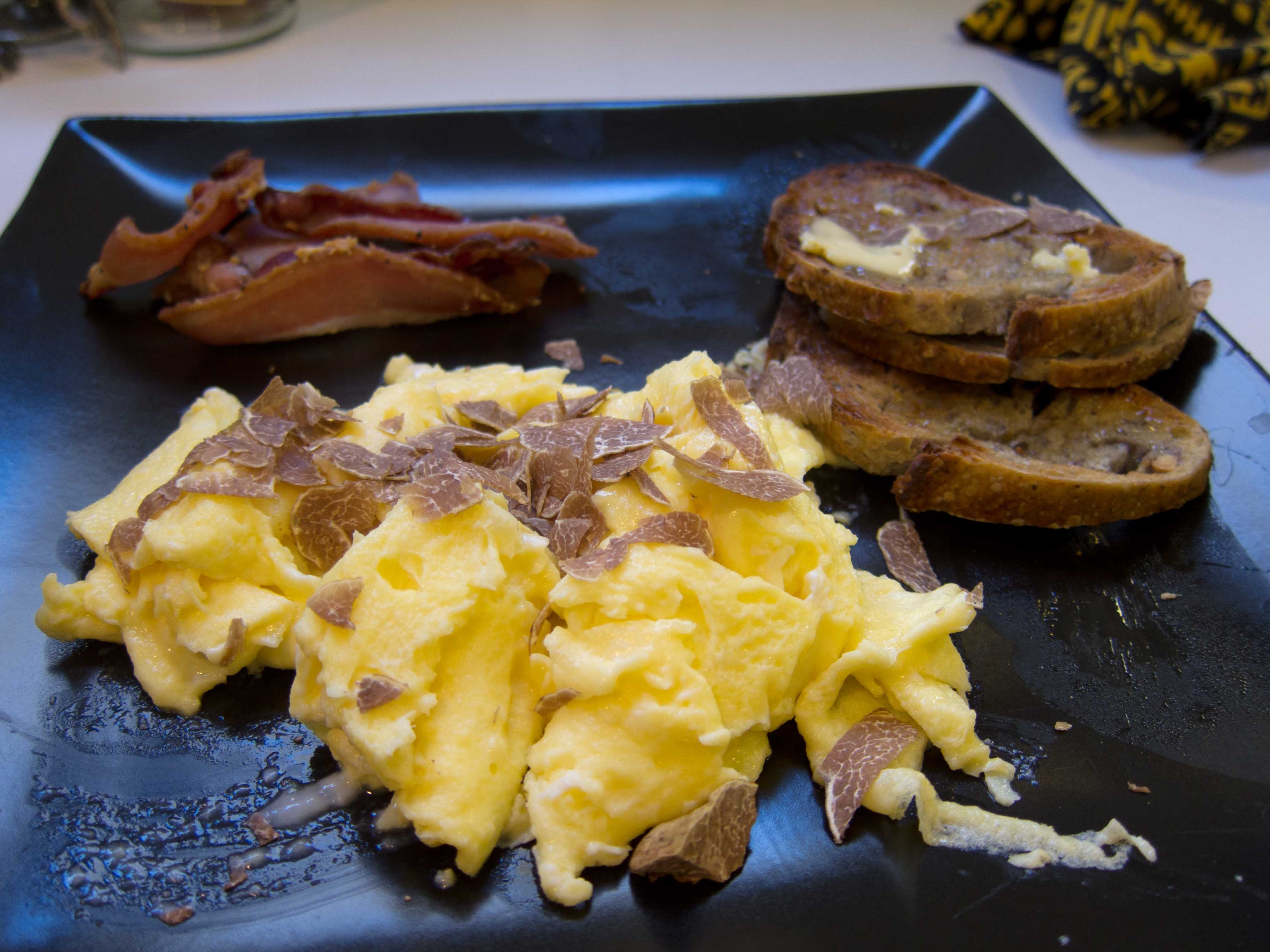
Scrambled eggs and truffles.
After our dinner at Oliveto, there was a tiny bit of precious fungus left, so we carefully cut it in half and each took our tiny treasure home.
Did you know that egg shells were porous? Well they are–if you think about it, the baby chicks need to breathe, so the air must be able to get inside.
This leads to one of the great breakfast treats of all time–you take you itty bitty truffle bit and put it in a large container with all your eggs and let them sit together for a couple of days for the aroma to infuse the eggs through the shell. Then you gently, softly, carefully cook the eggs under low heat and serve them with the remaining truffle slices. It’s just wonderful.
I even went to the store and bought some imported Irish butter. American butter is 20% water, European butter isn’t. So it’s much richer and creamier, albeit more expensive. Spreadit on top of some fresh walnut bread from Grace Baking, top with a slice of truffle and you’ve finished up the leftovers from your dinner out in grand style.
Ridiculously Sublime. Or Sublimely Ridiculous.
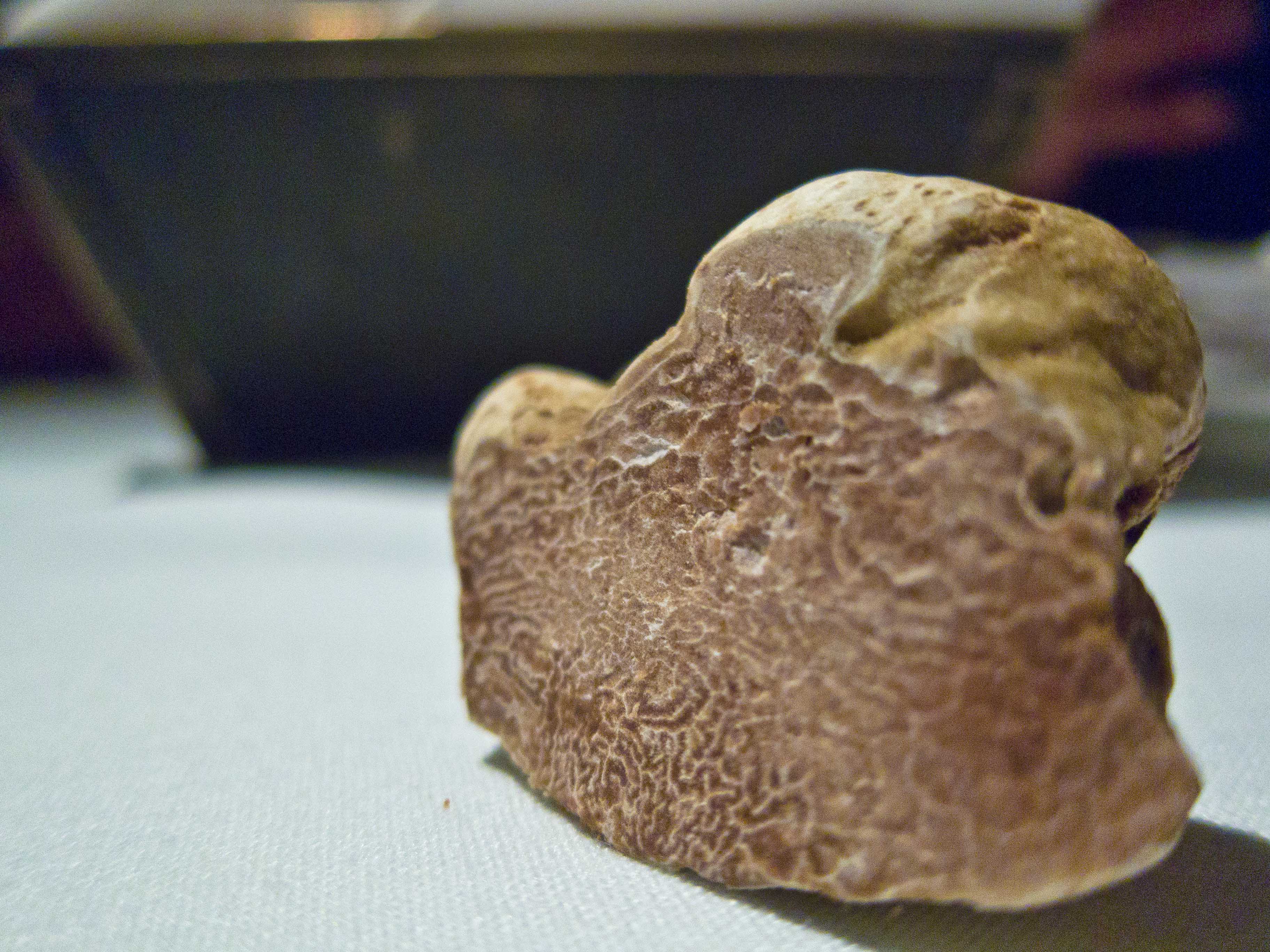
What all the fuss is about.
It’s truffle time again, and we made our annual pilgrimage to Oliveto in Oakland for dinner with David and Mari Lee and a celebration of overpriced Italian fungus. For one week every November, every dish on the menu is designed around the delicate aroma of white truffles, and we wouldn’t miss it for the world.
The owners of the restaurant go to Italy themselves to procure the raw materials–little nubbins of a fungus that grows on the roots of oak trees. You can’t plant them, you can’t manage them, you can’t domesticate them. You wander around the forest with trained dogs (the French use trained pigs, but what do the French know?) and dig where the dogs point. The rarity combined with the difficulty of finding them is why the price is so high. This year Oliveto’s owners came home with 5,700 grams of white truffles–which, if they sell out, will gross $57,000 for the restaurant. In case you’re wondering, 5,700 grams is about 12.5 pounds, or a medium Thanksgiving turkey.
The first part of the meal involves buying your truffle. They come around with a plate with a few choices of varying sizes. You pick them up, sniff them, feel them to see if there are soft spots, clutch your heart and choose something that seems appropriate. We chose this one:
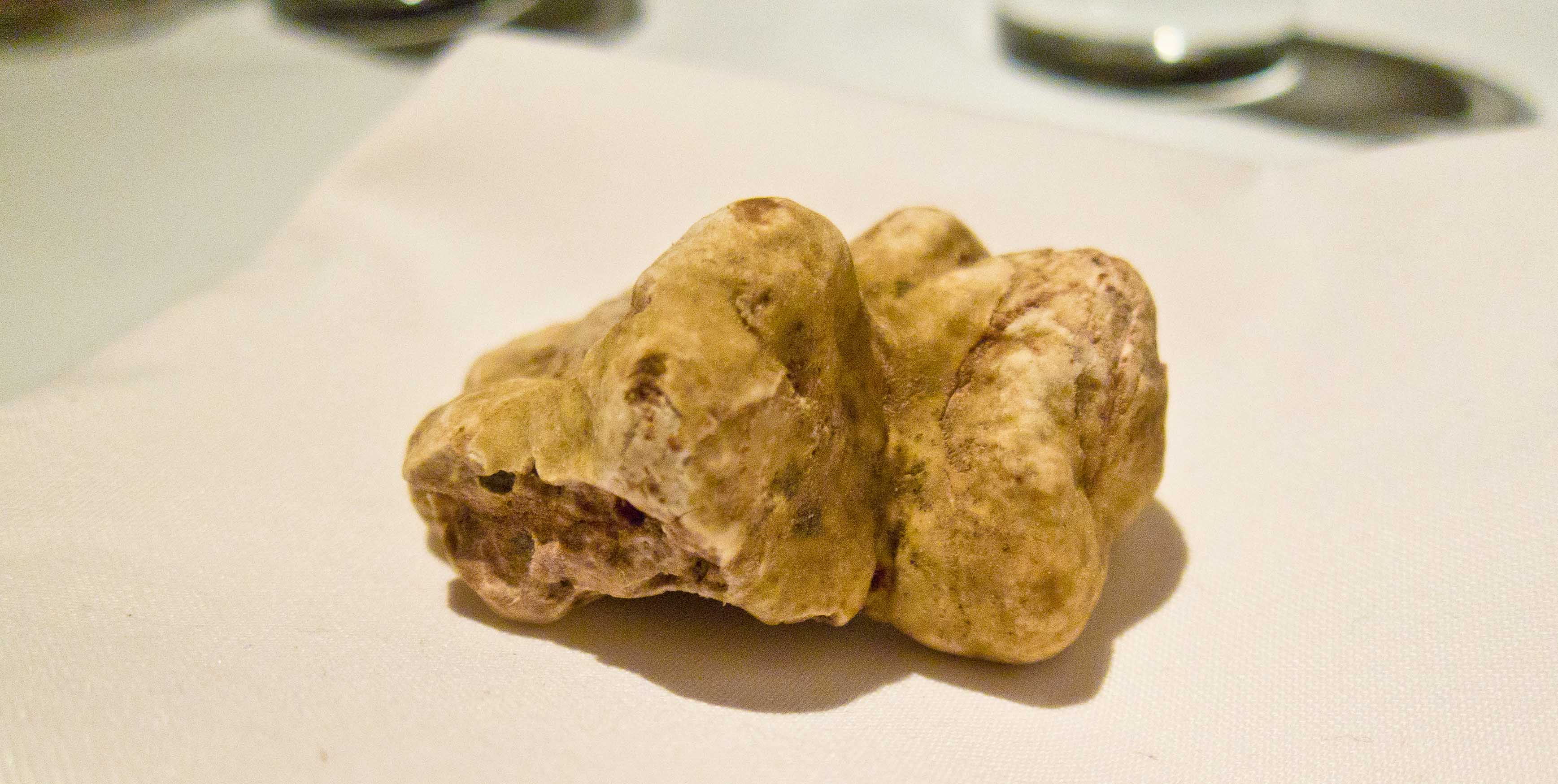
Our truffle.
Having purchased your little piece of culinary gold, you get to shave it all over your food. The house has an employee who just wanders around with an official truffle shaver helping people out, but the serious foodie in-crowd own their own, so they don’t have to wait. That would be our friend, David.

Life is easier when you can shave your own truffles.
A condiment this expensive deserves something great to put it on. Truffles work best with soft, rich flavors so that’s what Oliveto is serving. Here’s what we had, or at least the dishesI got good photos of. Gail started out with the poached egg on chicken hash, which is apparently perfect. So perfect that I never got close enough to take a picture. I started with the polenta:
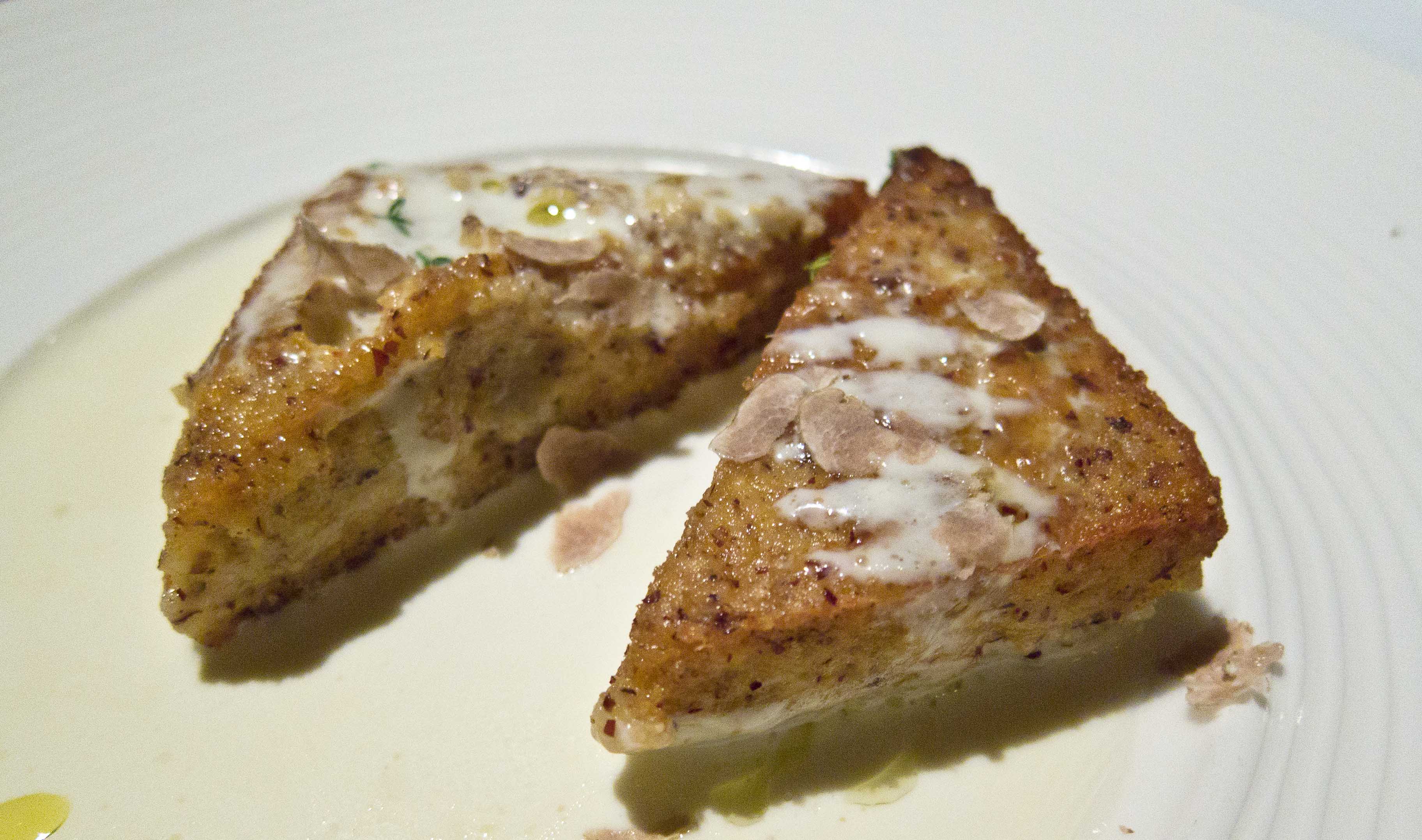
Red Flint corn polenta abbrustolita with La Tur crema
This is my favorite dish: thin egg noodles in butter sauce. I’d love it without the truffles, with them it’s heaven on a plate.

Tajarin with butter glaze
I rarely order chicken when we are out, but this dish seemed so perfect for the evening I couldn’t resist. I was right:
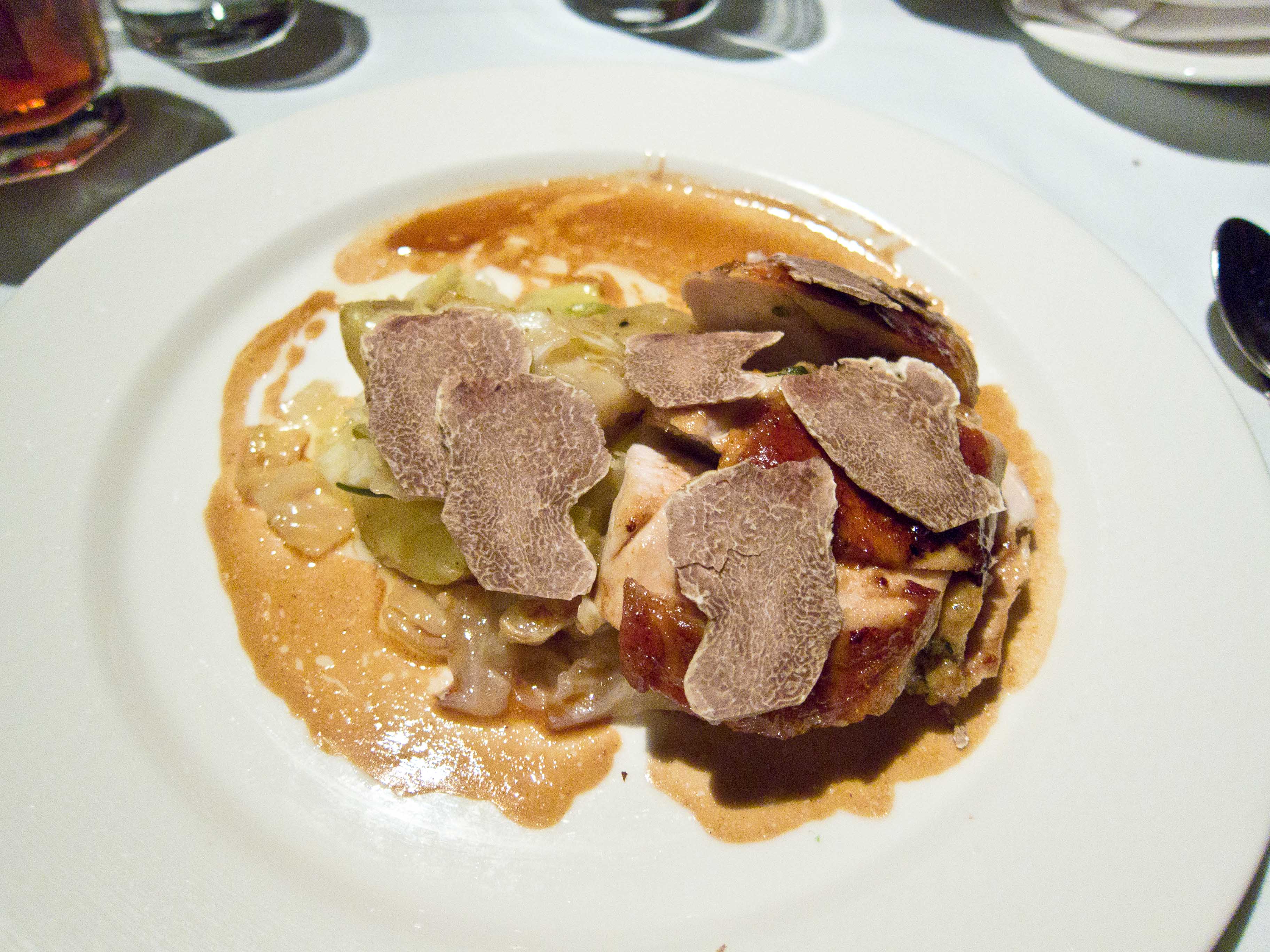
Fontina cheese-stuffed breast of hen with butter-braised cabbage and Yellow Finn potatoes. And just a few truffle slices shaved on top.
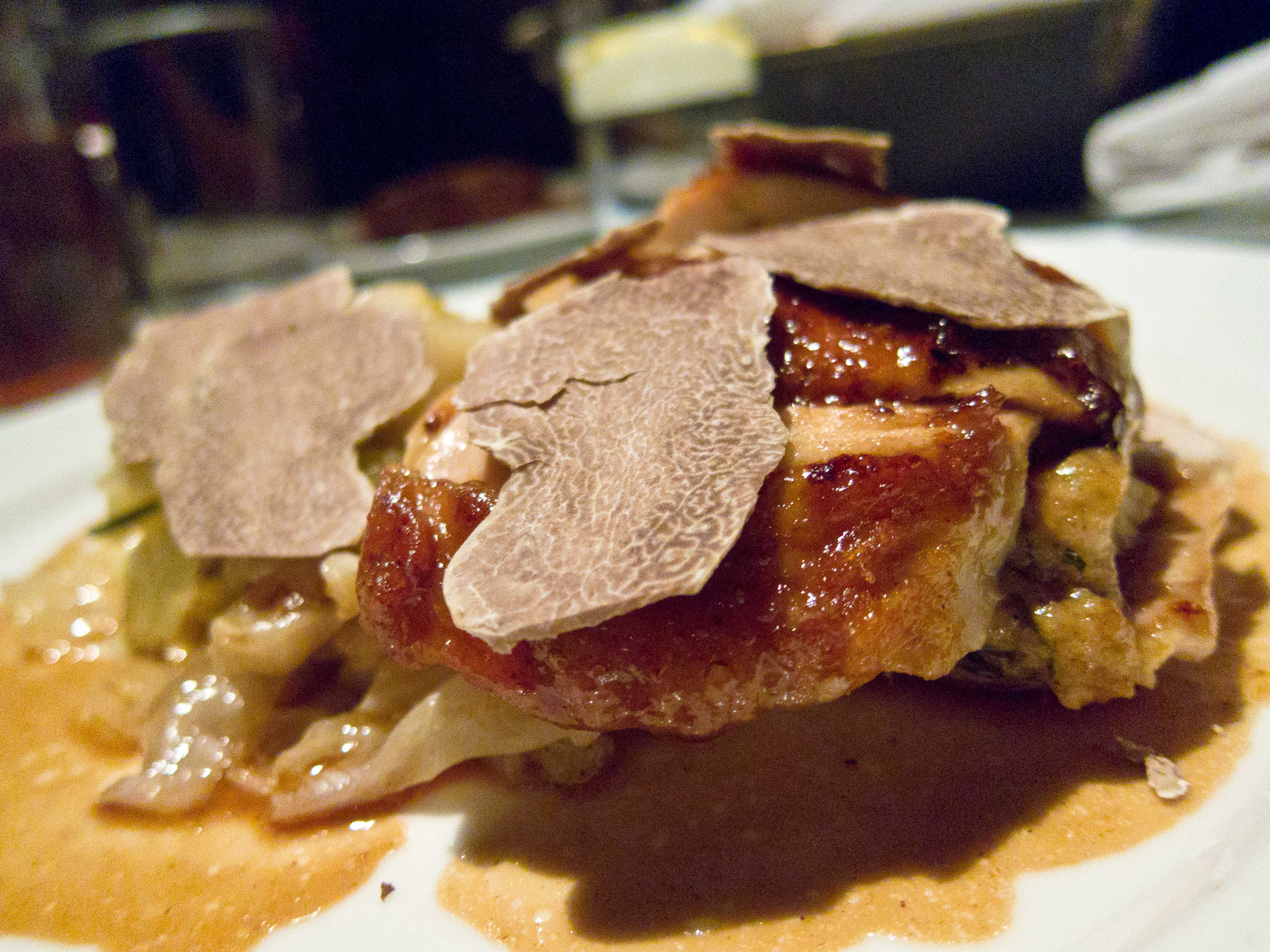
A closer view
Because the Lees are regulars, the chef, Jonah, came out to say hello. It’s nice to know the important people. He recommends the Raviolo gigande of house-made ricotta and farm egg as being even superior to the Tajarin, if you get a chance to try it out.
There aren’t really any truffle desserts, but after all that rich food who could eat dessert anyway? After about two hours, a couple of bottles of wine, three plates of the tajarin and assorted other fine viands, we staggered out into the night air. Next year is only 364 days away, I’m already looking forward to it.
Taking the girls to Origen
Last night was our monthly dinner with Margaret, and we had to go back to Origen, on Telegraph in Berkeley. I wrote about this place a couple of weeks ago when we got to go even before they officially opened, but it was time to go back and see how the operation is doing.
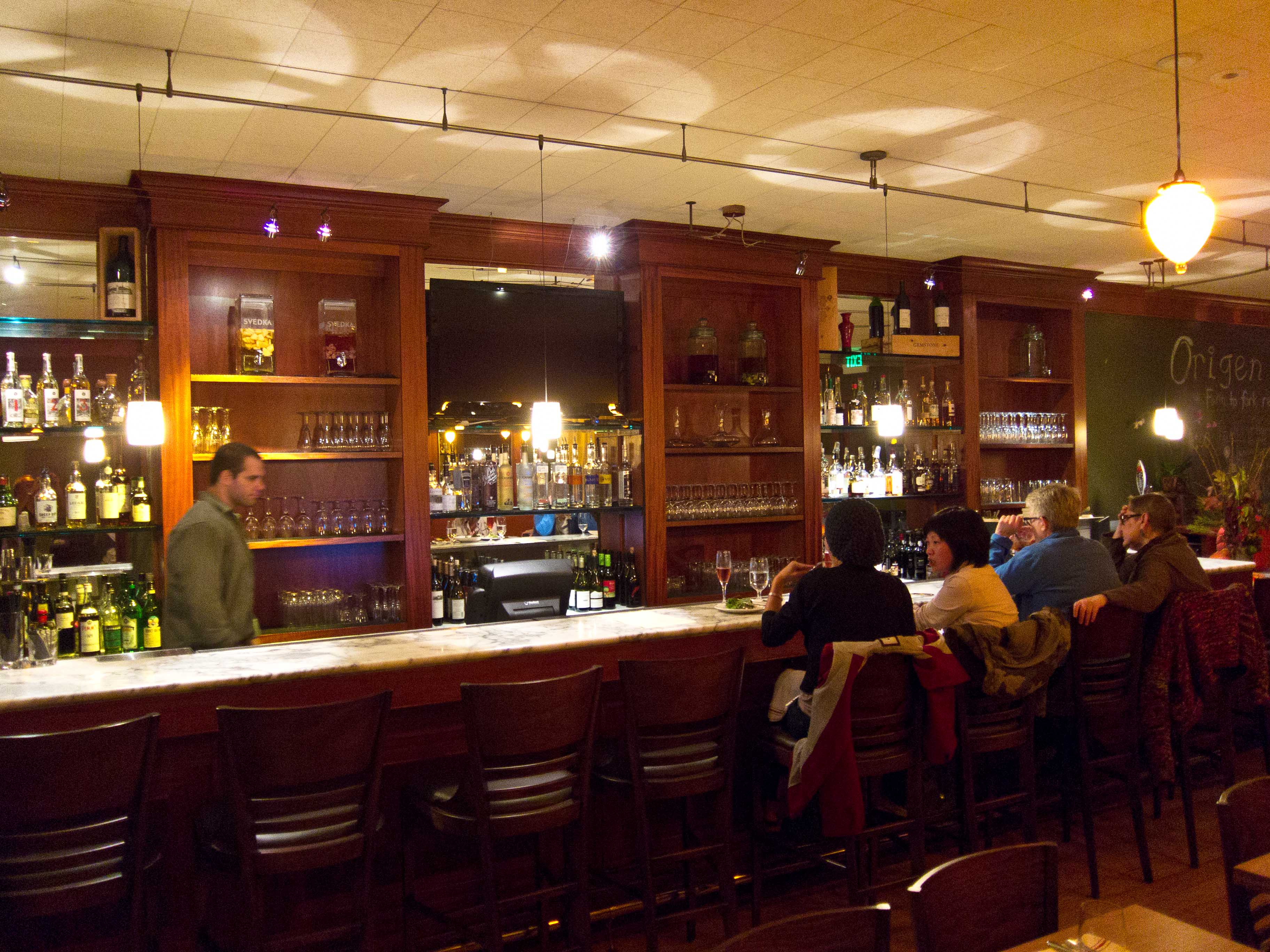
Good looking bar area
Taking Gail, Margaret and Barbara out is a hoot, not that I get many words in edgewise. Seeing Margaret, the most mature, gracious and ladylike of women, get just a touch rowdy is always fun, and the martinis at Origen seem to do the trick.

My dad said it was a martini if there was a bottle of vermouth in the house. I think Margaret agrees.
For a place that’s only been open 17 days, they seem to be doing a pretty good business. The food is very similar to what I always enjoyed at Nibblers, with a few additions–the new facility has a wood fired pizza oven, so there are gourmet type pizzas on the menu. They make a different paella every hour, so there will always be something new and different. Margaret was swooning over the shrimp cakes, and both Gail and Barbara insisted on their own tamales, but I got them to share.
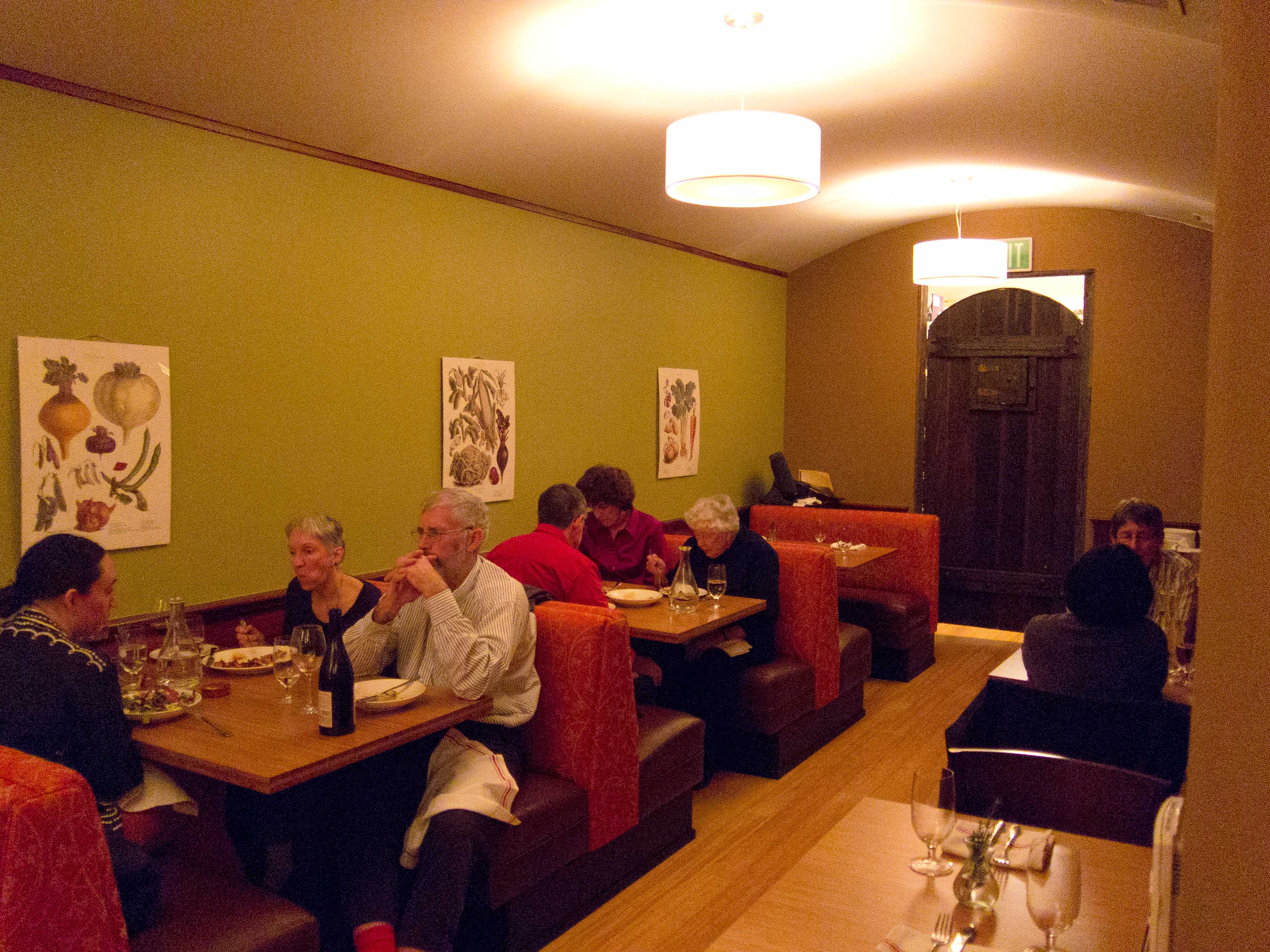
One of the two dining area.
The chef came out to see what all the ruckus was about:
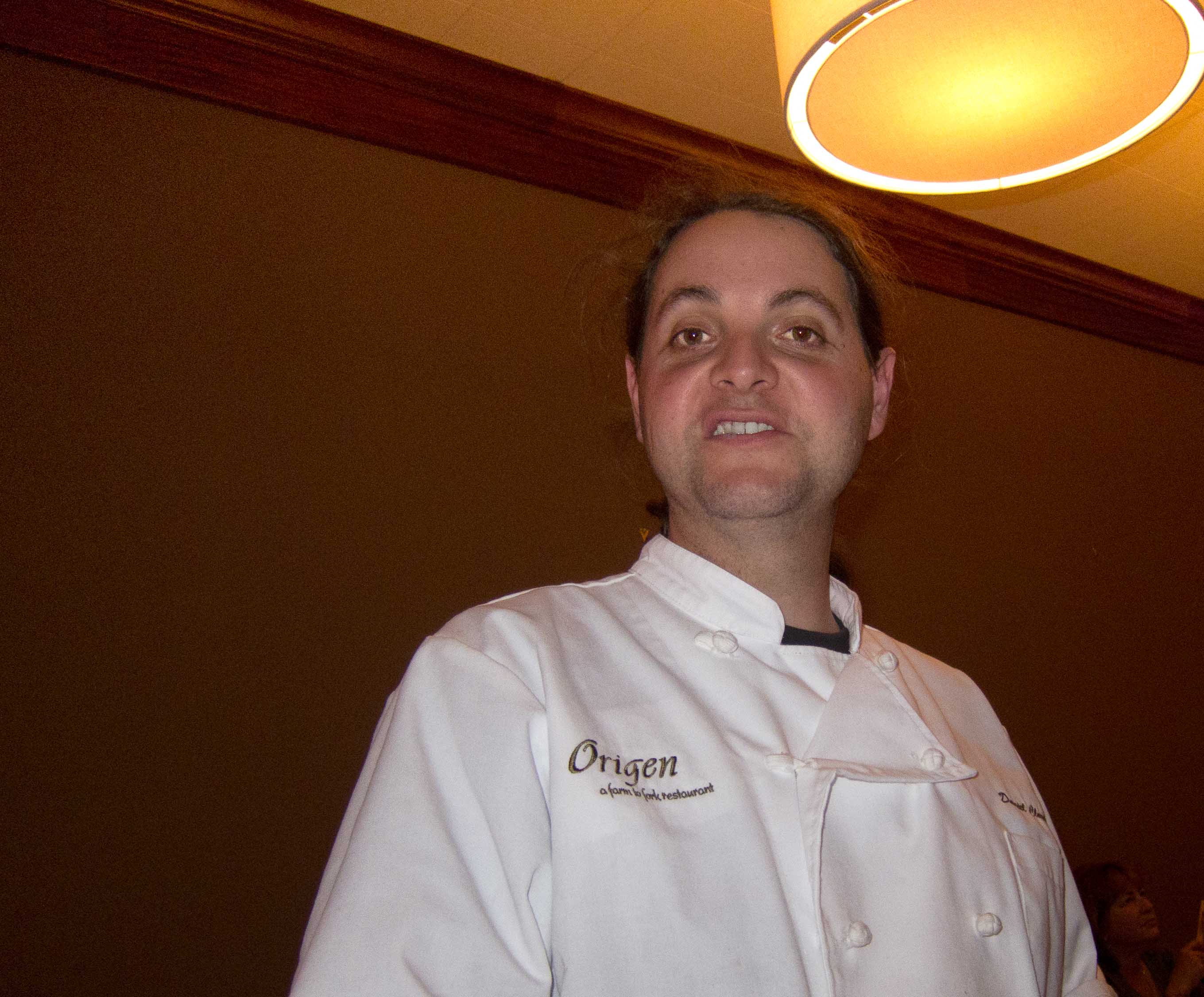
Daniel Clayton, looking executive
I snuck into the huge kitchen to see what was happening:
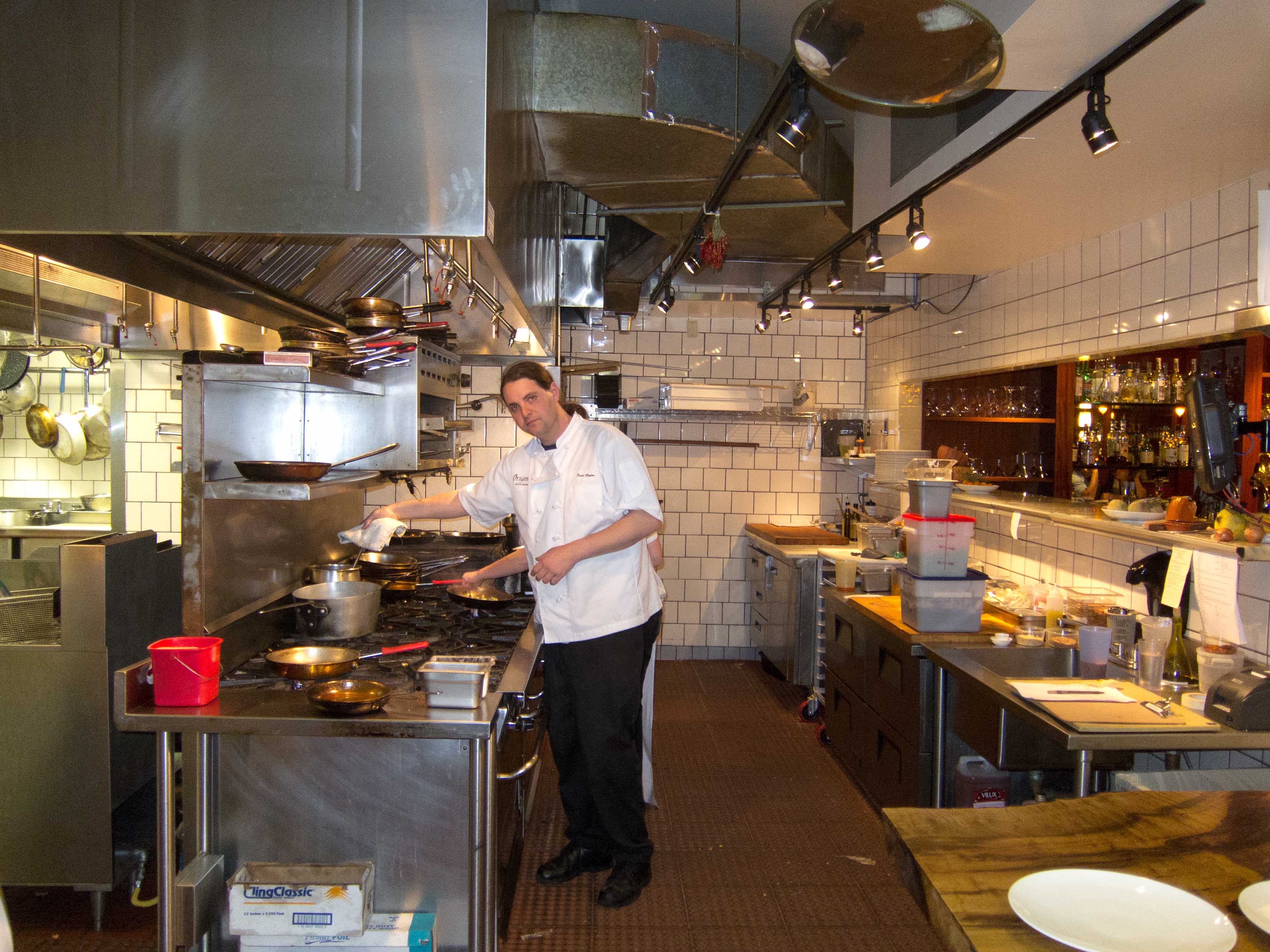
I dream of a kitchen like this. And this is just the front half.
We had the fried spinach, of course. And the paella, the shrimp cakes, the tamales, the brussels sprouts, the gnocchi and finally the pecan blondie with molasses ice cream. And another martini. The forks keep slipping off the plates, and we had the staff laughing as they had to keep getting them off the floor and replacing them.

The food kept coming. The laughing, too.
Next month, we’re going to try the new restaurant at Rossmoor. I wonder if they are prepared for that much fun in one night.
I just sat and smiled
I found this on Peta Pixel, the just sat there and smiled:
On 11/11/11, Gerald Donovan aimed his Canon 5D Mark II and 14mm f/2.8 at Downtown Dubai and set it to shoot one photograph every 30 seconds. He left it there for 24 hours, and then took the 2880 photographs and turned them into this beautiful time-lapse showing the passing of a day. What’s neat is that the reflection of the sun and moon can be seen going up and down the Burj Khalifa, the tallest building in the world.
Another one bites the dust
Somewhere there must be a Republican candidate worthy of the name, and the job for which he is competing. Palin is gone, Perry is toast, not the Herminator has made a fool of himself with his complete ignorance of foreign affairs. There is more to being president than mouthing Tea Party talking points. Anti-intellectual sloganeering may get the Tea Party base excited, but ignorance is not the way to run a country.
Chuck Wong, Diamond Life Master
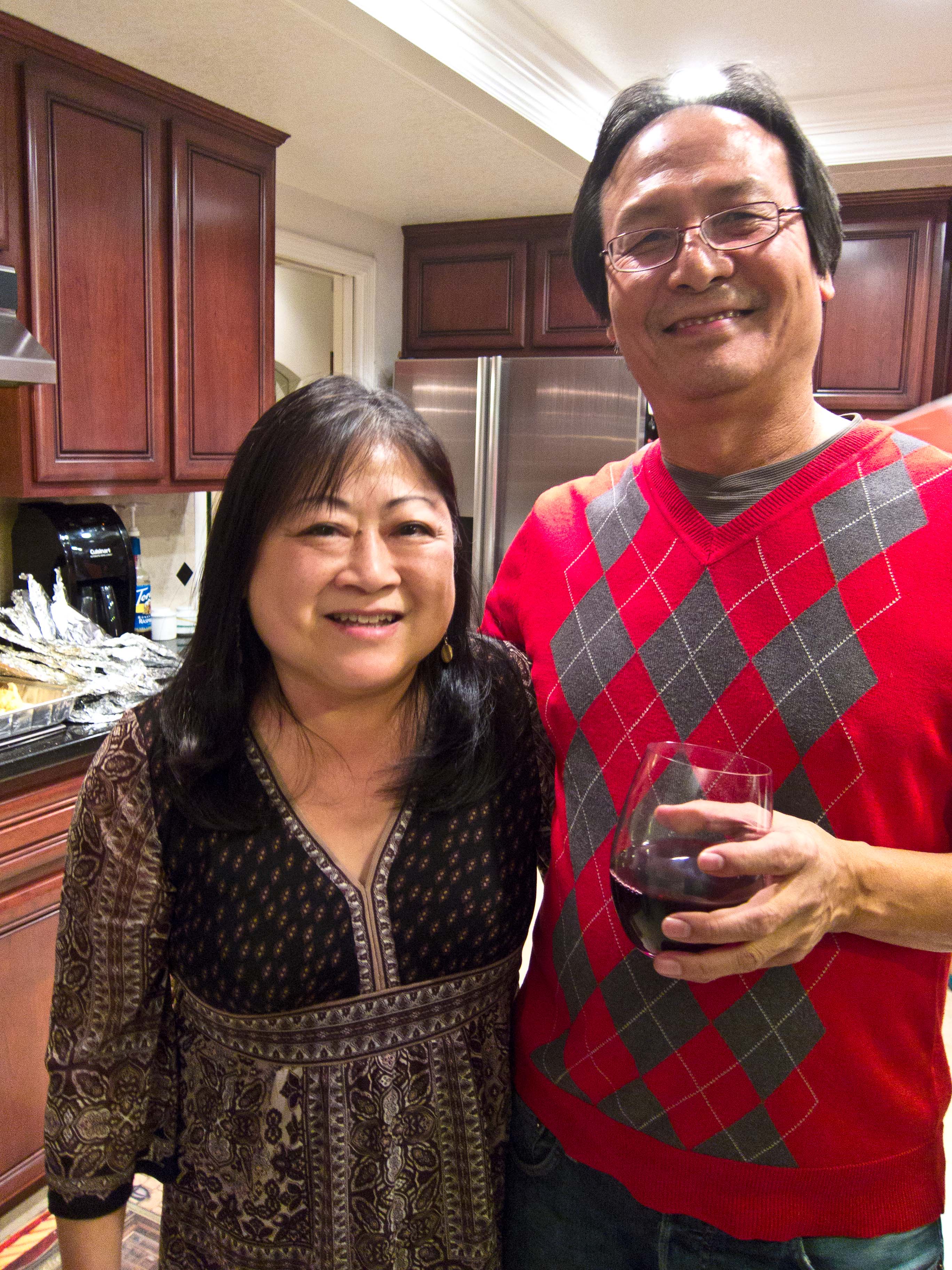
Chuck and his rarely seen wife, Leona. She throws a heck of a party.
Big party Saturday night for Chuck Wong, who has gone over 5000 points and is claiming the title of Kirkland/Costco Life Master.
That’s because 2000 or so of those points came from playing on Bridge Base, which is almost like bridge except that you can’t make as many mistakes–revokes, bids our of turn, insufficient bids, leads out of turn are all prohibited by the software. You can even win points playing with and against robots, so there is no human element at all. It’s a game of some sort, it just isn’t bridge.
But I’m not here to denigrate Chuck’s accomplishment–5000 is a ton of points, and you don’t get there without being a damn fine player. The league says that you can only count online points for 1/3 of the total needed for any given rank, so he won’t be a true Diamond Life Master until he collects another 60 or so real life points. The way he plays, that should take a few weeks, at most, less if he goes to a regional or the nationals.
The party was great–Chuck and Leona have a beautiful house in Blackhawk, and there was food enough for an army. Ron Kow (and the elusive Helen) brought won tons, spicy for most people and mild for the sissies like me. There was a bit of caviar to spread on the brie, for some high class luxury.
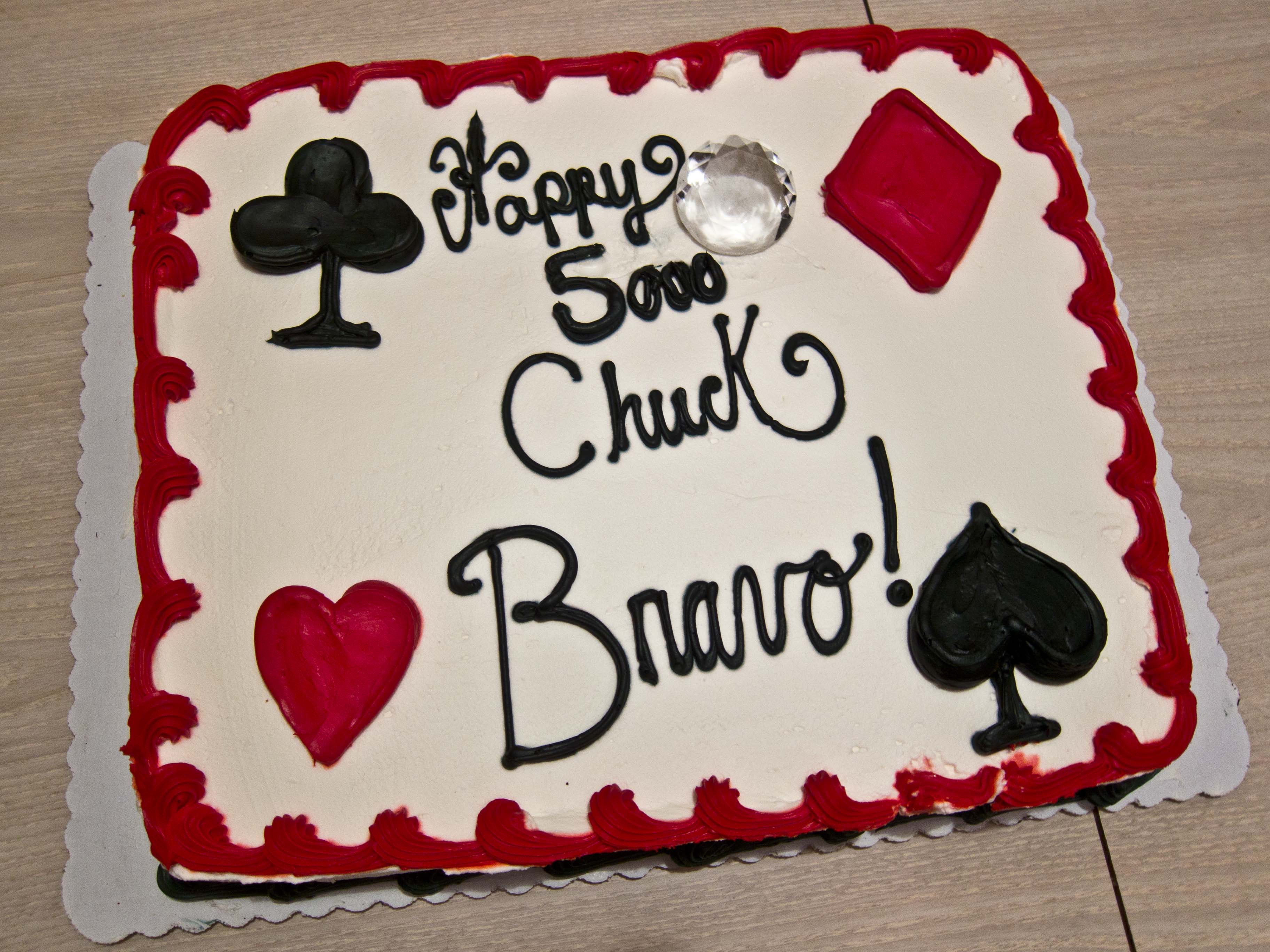
The diamond probably isn't real.
As any good party should, there was cake.
Then there was the video of the opera Chuck sang in last month in Livermore–I have always found that every bridge player has some other interesting avocation, and Chuck is no exception.
So congratulations Chuck. Only 2500 more points to Emerald. I’ll race you.
A better way to build a freeway

The freeway is overhead, leaving the city streets unblocked and open
Mexico City is enormous–25 million people and growing. The city isn’t growing upward, like Hong Kong, but outward, constantly engulfing the outlying villages. Moving all these people around every day is a logistical nightmare as the traffic gets ever thicker and the “rush hour” expands to all day and half the night.
One of the things that helps is the periferico, the elevated peripheral freeway that encircles the city, just like the beltway in Washington D.C., or the peripherique in Paris. The problem is how to keep building more of it without bring the city to a standstill.
The construction technique they are using is brilliant. They build the road in a factory, and just truck it in.
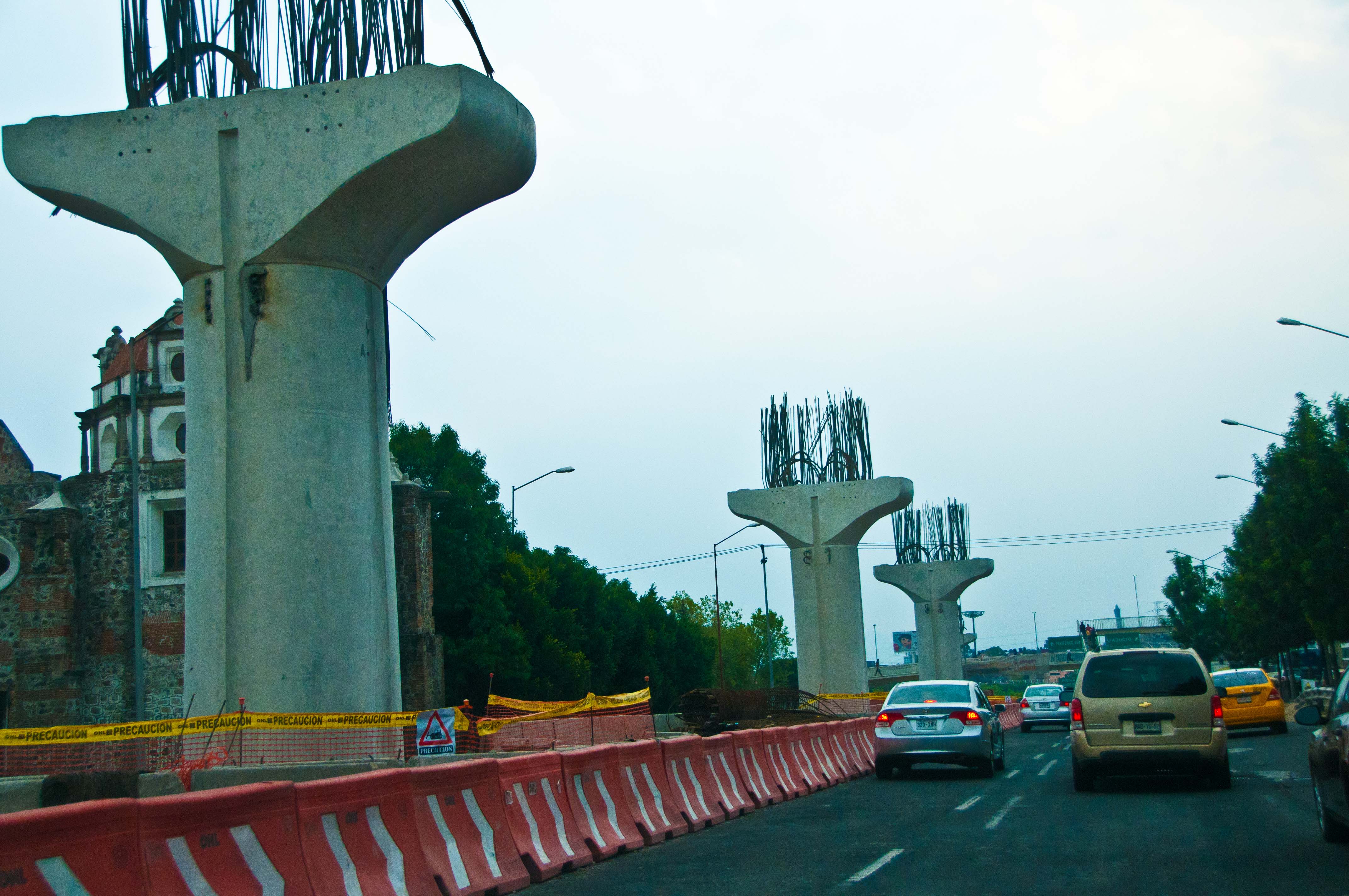
A row of tiers to place the freeway on.
Once the towers are in place, the freeway is factory built and trucked into place. This happens at night so disruption is held to a minimum. Then huge movable cranes lift the blocks of freeway into place:

These are the largest moveable cranes I've ever seen, and there are dozens or hundreds of them.
The blocks you see below are just the base, tying the towers together–there will be 3 or 4 lanes of freeway placed on top.

The place every other block, then fill in. And the freeway goes up in record time.
This method gets the freeway build very quickly, with the a very low amount of disruption to the already clogged surface roads. I expect it’s cheaper, too, building the huge pieces in factories where everything can be planned and repeated and there are efficiencies of scale.
People often look down on Mexico as a third world country, but their building process for this freeway is something I wish I saw happening around here. I cant forget that the Loma Prieta earthquake was in 1989 and the Bay Bridge still isn’t finished. (Remembering that the bridge only took 3 years to build in the first place in 1939, before computers)

 Totally Unauthorized